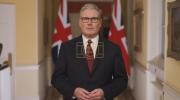
בריטישער פרעמיער מיניסטער סטארמער פארדאמט איראן אטאקעס, און שטעלט ארויס פארטיידיגונגס דזשעטס.
גאלערי
ווידעאס
British Prime Minister Keir Starmer announced that the United Kingdom did not participate in the initial U.S. and Israeli strikes on Iran and will not join offensive operations, while confirming that British forces are actively engaged in defensive missions to protect UK personnel, regional partners, and critical infrastructure. The statement comes amid escalating tensions following Iranian retaliatory attacks, including a strike on a military facility in Bahrain that narrowly missed British service members.
Starmer emphasized that British aircraft are already conducting interception operations, targeting incoming missiles and drones threatening UK interests and allied assets. He framed these actions as lawful defensive measures consistent with international law and necessary to safeguard approximately 200,000 British citizens currently located across the Middle East. Additional protective steps have been taken to reinforce British bases throughout the region, reflecting heightened threat assessments tied to Iran’s expanding strike activity.
While distancing the UK from direct offensive participation, Starmer confirmed that London granted U.S. forces permission to use British bases for limited operations aimed at neutralizing Iranian missile launch sites that pose an immediate danger to British lives and allied security. This arrangement underscores the UK’s role as a strategic enabler within the transatlantic alliance while maintaining its stated policy of avoiding direct involvement in initiating hostilities.
The prime minister strongly condemned Iran’s retaliatory campaign, describing it as indiscriminate and destabilizing, and called on Tehran to halt its strikes, abandon weapons development programs, and return to diplomatic engagement. He also criticized the Iranian government’s domestic repression, framing the current crisis as the result of regime choices rather than an inevitable regional confrontation.
In a notable operational development, Starmer announced plans to deploy Ukrainian drone defense specialists to assist Gulf partners in countering Iranian unmanned aerial systems. Drawing on Ukraine’s extensive battlefield experience against drone swarms, this initiative aims to enhance regional air defense effectiveness and reflects a growing integration of lessons learned from European conflict into Middle Eastern security planning.
At the same time, Starmer invoked the legacy of the Iraq War as a cautionary reference point, stressing that the UK has learned from past mistakes and will pursue a measured approach that prioritizes defensive obligations and alliance commitments without entering a new large-scale conflict. This balancing act seeks to maintain deterrence, uphold international law, and prevent further escalation while preserving domestic and international political support.
The UK’s posture illustrates a calibrated strategy: active defense and alliance support combined with restraint in offensive action. By intercepting threats, enabling targeted U.S. defensive operations, and reinforcing regional partners, London is positioning itself as a stabilizing actor focused on protection rather than escalation. Whether this approach succeeds in limiting the conflict’s expansion will depend on Iran’s response and the effectiveness of ongoing diplomatic efforts to de-escalate the crisis.
