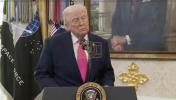
פרעזידענט טראמפ זאגט צו איבערצונעמען די קאנטראל אויפן הארמוז דורכגאס.
גאלערי
ווידעאס
Donald Trump has issued a forceful statement regarding the escalating situation in the Strait of Hormuz, declaring that the United States would have control over “anything we want.” The remark comes amid high-stakes negotiations aimed at reopening the critical global shipping route, which has been disrupted by Iranian threats of closure. Trump’s statement reflects a dual-track strategy that combines assertive deterrence with an expressed preference for avoiding large-scale destruction. In particular, he emphasized avoiding strikes on Iran’s newly built $10 billion power infrastructure if a resolution can be reached.
The Strait of Hormuz remains one of the most strategically vital chokepoints in the global economy, handling a significant portion of the world’s oil shipments. Iran’s threat to impose an indefinite blockade has already sent shockwaves through energy markets, with oil prices surging more than 15 percent within days. This volatility underscores the global stakes tied to theا as prolonged disruption could ripple across industries and economies. The United States has responded with a mix of military readiness and diplomatic outreach, aiming to restore stability without triggering a broader regional war.
The current standoff intensified following a 48-hour ultimatum issued by Trump, warning Tehran of consequences if the Strait remains closed. In response, Iran signaled its willingness to escalate, including potential actions targeting regional energy flows. This exchange has heightened fears of a direct confrontation, even as backchannel negotiations continue through international intermediaries. The balance between coercion and diplomacy is now central to preventing further escalation.
Trump’s rhetoric also serves as a strategic signal to both allies and adversaries, reinforcing the United States’ commitment to maintaining freedom of navigation in critical waterways. At the same time, his emphasis on preserving infrastructure suggests an awareness of the long-term economic and geopolitical costs of full-scale conflict. Analysts interpret this approach as an attempt to apply maximum pressure while leaving room for de-escalation and negotiated outcomes.
As tensions remain high, the situation in the Strait of Hormuz continues to be a focal point of global attention. The interplay between military posture, economic consequences, and diplomatic maneuvering will likely determine the next phase of the crisis. Trump’s statement encapsulates this dynamic, projecting strength while signaling that a peaceful resolution remains preferable if Iran chooses to step back from confrontation.
