די עפיק פיורי אפעראציע צו חרוב לייגן די באליסטישע סכנה
גאלערי
ווידעאס
U.S. forces have launched a sustained campaign to dismantle Iran’s ballistic missile infrastructure under presidential direction, with U.S. Central Command confirming that multiple launch sites, storage facilities, and support nodes have been struck as part of Operation Epic Fury. The effort targets what American officials describe as one of the most persistent and destabilizing threats in the Middle East: Iran’s decades-long development and proliferation of missile systems capable of reaching U.S. bases, allied territory, and civilian population centers.
The strikes follow a rapid escalation in regional hostilities after U.S.-Israeli operations eliminated senior Iranian leadership figures on February 28, triggering retaliatory missile launches across multiple theaters. In response, U.S. planners prioritized the suppression of Iran’s missile launch capability, focusing on hardened silos, mobile launcher networks, and command-and-control infrastructure that enable coordinated salvos. By degrading these assets, the campaign aims to reduce both the volume and effectiveness of future attacks.
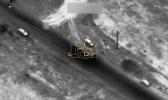
Infrared footage released alongside operational updates shows real-time interception and engagement sequences, with U.S. aircraft and unmanned systems tracking and neutralizing incoming projectiles. Platforms such as the F-15E Strike Eagle and MQ-9 Reaper played central roles in the operation, combining precision strike capability with persistent surveillance to identify launch activity and cue defensive responses. The integration of manned and unmanned assets allowed for rapid target acquisition and engagement, contributing to the reported neutralization of more than 1,000 hostile targets with minimal collateral damage.
The emphasis on precision reflects a strategic objective to eliminate military threats while avoiding civilian harm and limiting the scope of escalation. Advanced targeting methodologies, supported by layered intelligence and real-time sensor fusion, enabled U.S. forces to focus on operational nodes directly tied to missile deployment rather than broader infrastructure. This approach aligns with a doctrine of proportional response and defensive necessity, framed by officials as a measure to protect American personnel, Israel, and regional partners from ongoing missile attacks.
Iran’s ballistic missile program has long served as a central pillar of its deterrence strategy and a primary tool for power projection through both direct launches and proxy forces. The destruction of launch platforms and logistical support networks imposes significant constraints on Iran’s ability to conduct large-scale barrages, forcing greater reliance on dispersed or less survivable systems. In the near term, this reduces the immediacy of the missile threat while increasing the cost and complexity of reconstitution.
The operational success also reinforces U.S. air and missile defense dominance in contested environments. The ability to detect, track, and intercept incoming threats while simultaneously striking their points of origin demonstrates a comprehensive approach to modern warfare that integrates offensive and defensive capabilities. For regional allies, particularly Israel and Gulf states, the campaign provides both tangible protection and a visible reaffirmation of U.S. security commitments.
At the strategic level, Operation Epic Fury represents a shift from reactive interception to proactive threat elimination. Rather than solely relying on defensive systems to absorb incoming attacks, U.S. forces are targeting the underlying infrastructure that enables missile warfare. This approach seeks to restore deterrence by demonstrating that continued aggression will result in the systematic dismantling of critical military capabilities.
As the conflict environment remains fluid, the long-term impact of these strikes will depend on Iran’s capacity to regenerate its missile forces and its willingness to escalate further. For now, the operation has significantly altered the immediate threat landscape, showcasing the reach, precision, and technological integration of U.S. military power while delivering a direct response to a longstanding regional danger.
