קעריער שיף פארד פארט צום מיטל מזרח
גאלערי
ווידעאס
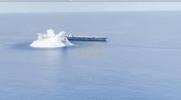
The U.S. Navy’s USS Gerald R. Ford demonstrated significant survivability during full-ship shock trials conducted in 2021, where the carrier endured three massive underwater detonations designed to simulate the effects of torpedoes or naval mines. Each explosion, equivalent to roughly 40,000 pounds of TNT, tested the vessel’s structural integrity, critical systems, and the crew’s ability to sustain operations under combat-like conditions. Following each blast, onboard teams conducted rapid damage assessments, restored affected systems, and returned the ship to operational status, underscoring what naval leadership described as its “fight through capability.”
Rear Adm. James Downey emphasized that the trials validated the carrier’s design improvements, including enhanced shock hardening of electronic systems, reinforced hull structures, and improved redundancy across power and combat networks. These features are intended to ensure that the ship can absorb damage while maintaining flight operations, command functions, and defensive capabilities—an essential requirement for modern carrier strike group warfare.
The renewed attention to the Ford’s shock testing comes as the carrier deploys toward the eastern Mediterranean, where it made a port call in Greece on February 23 amid heightened tensions involving Iran. While some commentary has framed archival footage of the shock trials as evidence of potential adversary capabilities, the explosions were controlled U.S. Navy tests conducted under carefully monitored conditions to certify the ship for combat readiness. Naval analysts note that such trials are standard for new classes of warships and are not indicative of hostile action.
Experts caution that while the shock trials confirm resilience against underwater blast effects, aircraft carriers operate within a broader defensive architecture that includes escorts, layered missile defenses, electronic warfare, and air cover. Modern anti-ship threats—such as long-range missiles, hypersonic systems, and deck-targeting munitions—present different engagement profiles than subsurface explosions. No single platform is designed to operate independently in high-threat environments without its full strike group and integrated defense systems.
The Ford class has faced scrutiny in earlier years over developmental challenges, including issues with advanced weapons elevators and certain support systems. Navy officials report that these deficiencies have been progressively corrected through post-delivery testing and operational refinement, allowing the carrier to meet deployment requirements and demonstrate sustained sortie generation capability.
Shock trials remain one of the most demanding evaluations in naval certification, providing empirical data on how a warship performs under extreme stress. For the USS Gerald R. Ford, the successful completion of these tests established a baseline of survivability that informs both tactical doctrine and future ship design. As the carrier operates in a strategically sensitive theater, its demonstrated ability to absorb and recover from significant shock events contributes to the overall deterrent posture of U.S. naval forces.
