פינף לענדער שיקן טרופן צו עזה סטאביליזאציע מיסיע.
גאלערי
ווידעאס
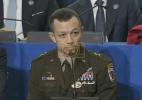
A major multinational security initiative for post-conflict Gaza is moving from planning to implementation, as U.S. Army Maj. Gen. Jasper Jeffers confirmed that five countries have formally pledged troops to the United Nations–authorized International Stabilization Force. The announcement came during the inaugural Board of Peace session in Washington, chaired by President Donald Trump, where participating states also secured more than $17 billion in reconstruction commitments and outlined a phased deployment strategy beginning in Rafah.
The pledged troop contributors—Indonesia, Morocco, Kazakhstan, Kosovo, and Albania—represent a geographically diverse coalition aligned around the objective of restoring order, preventing the reemergence of terrorist infrastructure, and creating the security conditions necessary for humanitarian recovery and civil governance. Indonesia will assume a central leadership role as deputy commander of the mission and has indicated it could contribute up to 8,000 personnel, making it one of the largest force providers in the stabilization framework.
The operational concept calls for an initial entry into Rafah, a critical corridor for humanitarian logistics and border control, followed by a gradual expansion across the Gaza Strip as security conditions permit. At full capacity, the force is expected to reach approximately 20,000 troops, supported by a parallel effort to build indigenous law enforcement capability. Egypt and Jordan have committed to training a 12,000-member Palestinian police service designed to assume internal security responsibilities over time, allowing the multinational force to transition from direct stabilization to advisory and oversight roles.
From a strategic perspective, the initiative reflects a shift toward a structured post-conflict model intended to prevent a security vacuum. U.S. planners view the presence of a multinational force as essential to denying militant groups the ability to regroup, rearm, or reestablish governance structures that previously embedded within civilian areas. The integration of Arab partners in police training is also designed to increase regional legitimacy and cultural interoperability, reducing friction between external security forces and the local population.
The financial commitments secured at the Board of Peace underscore the scale of the reconstruction challenge. Infrastructure rehabilitation, housing redevelopment, energy restoration, and medical system rebuilding will require sustained funding streams, and the pledges signal early international buy-in for a long-term stabilization effort. U.S. officials have framed the funding as contingent on verifiable security benchmarks, linking reconstruction progress to the maintenance of a demilitarized environment.
Criticism of the plan has centered on concerns about foreign troop presence and questions regarding sovereignty and governance. However, proponents argue that without a robust security architecture, reconstruction investments would be vulnerable to sabotage and the cycle of conflict would likely resume. The multinational composition of the force, combined with a defined transition to locally trained policing, is intended to mitigate perceptions of unilateral control while maintaining operational effectiveness.
Indonesia’s acceptance of the deputy command role is particularly significant, as it brings a large Muslim-majority nation into a leadership position within the mission. U.S. officials believe this will enhance diplomatic credibility across the broader Islamic world while reinforcing the message that the stabilization effort is focused on security and recovery rather than territorial administration.
As deployment preparations advance, the International Stabilization Force represents one of the most ambitious post-conflict security frameworks attempted in Gaza. Its success will depend on coordinated military discipline, sustained funding, effective police training, and the ability to balance immediate stabilization with a credible pathway toward locally managed governance. The coming months will determine whether this multinational model can deliver durable security while enabling reconstruction and preventing the return of extremist control.
