די טראנספערטאציע דעפארטמענט זאגט אז א דראט האט פאראורזאכט די באלטימאר בריק קראך
גאלערי
ווידעאס
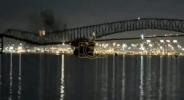
Newly released findings from the National Transportation Safety Board confirm that a single faulty wire, along with a secondary fuel pump issue, triggered the catastrophic loss of power aboard the cargo ship Dali before it slammed into Baltimore’s Francis Scott Key Bridge on March 26, 2024. The impact caused the bridge to collapse instantly, killing six construction workers and severing one of the city’s most important infrastructure links.
The Francis Scott Key Bridge stretched across the Patapsco River and served as the outermost crossing of Baltimore Harbor. As part of Interstate-695—the Baltimore Beltway—it carried tens of thousands of vehicles daily and functioned as a critical route for commercial and commuter traffic. The collapse caused months of economic disruption, port shutdowns, and widespread transportation detours.
According to the NTSB’s November 2025 investigation, the tragedy was not the result of terrorism or intentional action but a preventable mechanical failure. Investigators determined that a loose wire inside a circuit breaker caused two cascading electrical blackouts on the Dali. These failures shut down propulsion, leaving the vessel powerless and drifting directly into the bridge. A malfunctioning fuel pump compounded the blackout, preventing a rapid restart of the engines.
Video angles released in the months following the incident—including new footage showing the Dali drifting helplessly before striking the bridge’s support column—underscore how quickly the disaster unfolded once the ship lost control.
In response, the NTSB has issued **17 safety recommendations** aimed at preventing similar tragedies, including stricter inspections of electrical systems, updated protocols for commercial ship maintenance, and enhanced emergency-response systems aboard large cargo vessels.
Reconstruction of the Francis Scott Key Bridge is now estimated at **$5.2 billion**, one of the most expensive infrastructure rebuilds in American history. Federal and state officials continue to coordinate plans to restore the vital I-695 link, with early projections suggesting several years of work before full reopening.
The NTSB’s findings close one chapter of investigation but open a broader conversation about maritime safety, infrastructure resilience, and the vulnerabilities of major U.S. transportation routes. The collapse of the Key Bridge—caused not by sabotage, but by a loose wire—serves as a stark reminder of how small mechanical failures can lead to devastating national impacts.
