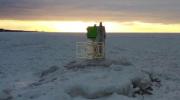

Striking drone footage captured on January 29, 2026, shows Lake Michigan appearing frozen solid along the shoreline in New Buffalo, Michigan, with towering, jagged ice formations completely encasing piers and a nearby lighthouse. The dramatic scene unfolded during sub-zero temperatures and powerful winds, transforming the normally turbulent lake into a frozen landscape that looks more Arctic than Midwestern.
The ice buildup was caused by freezing spray, a phenomenon that occurs when intense winds whip lake waves into the air, breaking them into supercooled droplets. As these droplets collide with solid structures such as piers, railings, and lighthouses, they freeze instantly on contact. Over time, layer upon layer of ice accumulates, creating thick, uneven formations that can grow rapidly during extreme cold and sustained winds.
The drone footage highlights how quickly conditions can change on the Great Lakes during severe winter weather. What begins as blowing spray can soon result in massive ice walls, sealing off access to docks and rendering shoreline structures unrecognizable. These conditions pose serious hazards, as ice-covered surfaces become unstable and freezing spray can overwhelm equipment and infrastructure in a short period of time.
While the visuals are breathtaking, officials warn that such scenes reflect dangerous conditions. The frozen appearance of the lake does not mean it is safe to approach, as ice thickness can vary dramatically and shifting winds can break formations apart without warning. The New Buffalo footage serves as a powerful reminder of the raw force of winter on Lake Michigan and the extreme weather events that continue to shape life along the Great Lakes.
גאלערי
ווידעאס