אטעם פארכאפטע ווידעא פון די נייע זעלבסט דרייווענדע דראונס פון די אמעריקאנע מיליטער
גאלערי
ווידעאס
World First: Tiny Autonomous Drone-Boat Lands Itself Inside a Moving US Navy Warship at RIMPAC 2026 With Zero Human Control
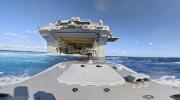
In a demonstration that is already turning heads across the global defense community, American maritime technology company Splash Industries has pulled off what its CEO Ivan Avanesov is calling a genuine world first: a fully autonomous drone-boat resupply mission completed aboard a moving United States Navy warship on the open ocean. During RIMPAC 2026 — the world's largest international maritime exercise — the company's compact 11-foot Typhoon unmanned surface vehicle navigated itself across open water, approached the USS Essex amphibious assault ship while it was underway, and guided itself entirely without human input directly into the vessel's well deck for a successful landing. Raw POV video footage of the historic approach and entry has been released, offering a remarkable first-person view of the autonomous system executing the mission with precision that would challenge the steadiest human hand. The feat was performed as part of the Naval Postgraduate School's CAMRE initiative, a cutting-edge program dedicated to advancing autonomous manufacturing and logistics capabilities for the U.S. military.
What makes this demonstration so significant is not just the technical achievement in isolation, but what it signals about the near-future battlefield of naval warfare and military logistics. Landing any vessel — let alone a small autonomous one — inside the moving well deck of a warship on the open sea requires extraordinarily precise real-time navigation, constant environmental adaptation, and split-second decision-making. The Typhoon USV accomplished all of this without a single human command during the approach and entry sequence, relying entirely on its autonomous navigation systems to read the motion of the ship, compensate for ocean swells, and thread itself into the well deck with pinpoint accuracy. RIMPAC 2026 has become a showcase for unmanned systems integration across multinational naval operations, and the Typhoon's performance stands out even in that ambitious context as a demonstration of what small, low-cost autonomous platforms can realistically deliver in time-critical logistical scenarios.
The implications for how the United States Navy — and its allies — resupply and sustain warships in contested or high-risk environments are profound. Traditional resupply operations require either slowing or stopping a vessel, bringing it to port, or deploying manned craft in potentially dangerous conditions. A fully autonomous USV capable of approaching and delivering supplies to a moving warship transforms that equation entirely, enabling faster, safer, and more flexible logistics chains without putting additional crew members in harm's way. For a Trump administration that has consistently championed American technological dominance and military readiness, the Typhoon USV is exactly the kind of homegrown innovation that keeps the United States Navy ahead of every competitor on the planet. Splash Industries and the Naval Postgraduate School have just shown the world what the next chapter of naval power projection looks like — and it is autonomous, it is precise, and it is American.
