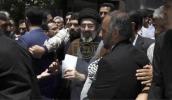
מודזשטאבא, זון פון כאמענעי, איז געווארן איראן'ס נייער העכסטער פירער.
גאלערי
ווידעאס
Mojtaba Khamenei’s elevation to the highest political and religious authority in Iran represents an unprecedented development since the 1979 Islamic Revolution that established the Islamic Republic. While the Supreme Leader is officially chosen by the Assembly of Experts, a body of senior clerics responsible for appointing and supervising the position, the succession of a son directly replacing his father has drawn intense scrutiny both inside and outside Iran. Critics argue that the move resembles hereditary power transfer more commonly associated with monarchies rather than the ideological framework the revolution originally promoted.
The announcement was broadcast through Iranian state media, which reported that the Assembly of Experts had convened in an emergency session following the death of Ali Khamenei. Shortly afterward, senior officials within Iran’s Islamic Revolutionary Guard Corps pledged loyalty to Mojtaba Khamenei, signaling the powerful military organization’s support for the new leadership. The IRGC has long served as one of the most influential institutions in Iran’s political and security structure, and its public endorsement is widely seen as essential for maintaining regime stability during periods of leadership transition.
Mojtaba Khamenei, who has operated largely behind the scenes for years, has long been viewed by analysts as one of the most influential figures within Iran’s inner power circle. Though he has never held a formal top-level government position, he has been deeply involved in political strategy, clerical networks, and the operational affairs of the Islamic Revolutionary Guard Corps. Observers say he played a key role in consolidating power within the conservative faction of Iran’s leadership and maintaining ideological continuity with his father’s policies.
