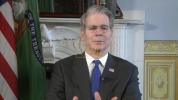
סקאט בעסענט זאגט אז עס איז פארהאן א שטארקע גוטע באציאונג צווישן אמעריקע און טשיינע
גאלערי
ווידעאס
Treasury Secretary Scott Bessent offered a measured assessment of U.S.-China economic relations in a recent briefing, describing the current situation as a “stable but competitive” point. He emphasized that the goal is fair competition and de-risking of critical industries—not full economic decoupling—reflecting a pragmatic approach to one of the world’s most consequential bilateral relationships.
Bessent pointed to China’s record $1.189 trillion global trade surplus in 2025, noting that persistent imbalances must be addressed through coordinated efforts by the IMF, the G7, and targeted U.S. policies. While U.S. tariffs currently average 27% and China has imposed retaliatory controls on minerals and other strategic commodities, the Treasury secretary framed rivalry as a driver for economic strength rather than a destabilizing force.
The briefing highlighted the importance of supply chain resilience in sectors like semiconductors, critical minerals, and other strategic industries. Bessent emphasized that mutual respect between President Trump and Chinese President Xi Jinping has been a key factor in stabilizing relations, allowing both countries to pursue competition without undermining economic cooperation.
This approach marks a notable shift from prior hawkish rhetoric, presenting U.S.-China competition as a structured, rule-based engagement that prioritizes national sovereignty while encouraging global economic balance. By focusing on de-risking and fair competition, the Trump administration aims to strengthen U.S. economic security and maintain a strategic edge in critical sectors, all while mitigating the risks of escalation or disruptive decoupling.
