העגסעט בארואיגט טשיינע אז אמעריקע זוכט זיי נישט צו באזיגן
גאלערי
ווידעאס
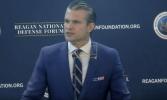
Trump Administration Secretary of War Pete Hegseth delivered a calibrated and strategically balanced message at the Reagan National Defense Forum on December 6, 2025, emphasizing that the United States is not seeking to contain, humiliate, or economically suppress China. Speaking to an audience of defense leaders, Hegseth outlined a doctrine centered on “deterring China through strength,” paired with what he called “flexible realism”—a posture designed to prevent conflict while maintaining clear American resolve in the Indo-Pacific.
“We are not trying to strangle China’s growth,” Hegseth stated, directly addressing key accusations often leveled by Beijing. “We are not trying to dominate or humiliate them, nor are we trying to change the status quo over Taiwan.” His remarks were crafted to reassure China that American military preparedness is defensive, not expansionist, even as the U.S. increases forward presence and modernizes capabilities across the region.
Hegseth’s comments build on the foundation he laid earlier this year at the Shangri-La Dialogue, where he stressed deterrence without provocation and partnerships without escalation. Under President Trump’s second-term defense strategy, the Indo-Pacific is being reinforced with advanced naval deployments, enhanced missile defenses, expanded intelligence-sharing with allies, and stronger bilateral ties with key partners like Japan, South Korea, Australia, and the Philippines. These moves have been interpreted by Beijing as signs of containment, particularly regarding Taiwan, which China views as a core national interest.
But the Secretary of War made clear that the administration’s goal is stability, not confrontation. By explicitly stating that Washington does not seek to alter the Taiwan status quo, Hegseth aimed to reduce strategic misinterpretation—one of the most dangerous drivers of conflict between major powers. Instead, the message was firm: peace is best preserved when America is strong, predictable, and prepared.
Hegseth’s remarks highlight a broader shift in U.S. strategic communication under President Trump’s leadership. Rather than leaning into Cold War-style rhetoric, the administration is emphasizing deterrence grounded in purpose, transparency, and confidence. The approach signals that the United States will defend its interests and those of its allies while avoiding unnecessary escalation or ideological crusades.
With tensions in the Indo-Pacific drawing growing global attention, Hegseth’s speech served as a reminder that American strength remains the cornerstone of regional stability. By pairing reassurance with resolve, the Trump Administration is articulating a strategy that seeks to prevent conflict while ensuring that democratic nations—including Taiwan—are protected from coercion. In the evolving competition with China, the goal remains unmistakable: peace through strength, backed by clarity and realism, not confrontation.
