איראן באשולדיגט מדנ"י אין פאלשע באשולדיגונגען איבער אטאקעס
גאלערי
ווידעאס
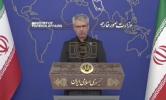
Iran’s government has publicly rejected accusations that it launched missile attacks against Azerbaijan, Turkey, and Cyprus, instead claiming that the reported incidents were part of what it describes as Israeli “false flag” operations designed to inflame regional tensions. The statement was delivered by Iranian Foreign Ministry spokesperson Esmail Baghaei, who argued that the allegations are an attempt to manipulate public perception and widen the ongoing conflict across the Middle East.
Baghaei asserted that Tehran had no role in attacks against the three countries and accused Israel of orchestrating incidents intended to create diplomatic friction between Iran and neighboring states. According to the spokesperson, such tactics have historical precedent, referencing the 1954 Lavon Affair as an example of covert operations used to influence regional politics. By invoking that episode, Iranian officials are attempting to frame the recent accusations as part of a broader pattern of deception designed to justify military escalation against Iran.
The denials come during an already volatile phase of the 2026 regional conflict, which intensified after large-scale U.S. and Israeli airstrikes were launched on February 28 targeting Iranian military infrastructure. Those strikes reportedly resulted in the death of Supreme Leader Ali Khamenei, a development that dramatically reshaped the political and military landscape inside Iran and triggered a series of retaliatory responses from Iranian forces.
In the days following the strikes, Iran launched multiple missile barrages directed toward strategic locations across the region. Many of these projectiles were intercepted by advanced air defense systems operated by NATO-aligned forces and regional partners. Turkish authorities confirmed that their air defense units successfully neutralized incoming munitions believed to have originated from Iranian territory, preventing damage and casualties.
The claims surrounding attacks on Azerbaijan, Turkey, and Cyprus have therefore become a central point of dispute in the information battle accompanying the broader military confrontation. While Iran insists the incidents were fabricated or manipulated by Israel, officials in several affected countries have maintained that the threats were real and required immediate defensive action. This disagreement highlights how narratives surrounding the conflict are being contested alongside events on the battlefield.
Strategically, accusations of false flag operations carry significant implications. If such claims were accepted internationally, they could undermine the justification for further military operations against Iran. Conversely, if Iran were proven responsible for strikes against NATO members or their partners, it could risk triggering a much wider regional confrontation involving additional Western military forces.
For Turkey in particular, the situation places Ankara in a sensitive position. As a NATO member with complex diplomatic ties across the Middle East, Turkey must balance its alliance obligations with its regional relationships. Confirmation that Turkish defense systems intercepted hostile projectiles has reinforced the country’s defensive readiness, but it also increases pressure on Tehran as the conflict evolves.
The information war surrounding these incidents reflects the broader uncertainty that now defines the region. With multiple actors involved and military operations continuing across different theaters, determining responsibility for individual attacks can become difficult, especially when governments are competing to shape the narrative of events.
As the 2026 conflict continues to escalate, the dispute over these alleged missile attacks demonstrates how quickly regional tensions can expand beyond their original battlefield. Iran’s accusations against Israel add another layer to an already complex geopolitical confrontation, where military operations, diplomatic messaging, and strategic communication are unfolding simultaneously.
Whether the allegations will be independently verified remains uncertain, but the episode underscores the fragile state of regional stability. With NATO allies already involved in defensive operations and Iran facing sustained military pressure, even disputed incidents have the potential to widen the scope of the conflict and further heighten tensions across the Middle East and Eastern Mediterranean.
