פראטעסטירער אין אלבאניע באפאלן רעגירונגס געביידעס
גאלערי
ווידעאס
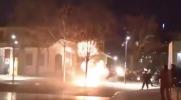
Violent anti-government protests erupted in Tirana on March 23 as thousands of demonstrators targeted Prime Minister Edi Rama’s office, other government buildings, and police vehicles with Molotov cocktails, flares, and fireworks. Riot police responded with tear gas and water cannon as thick smoke filled central areas of the Albanian capital. The unrest reflects deepening anger over corruption allegations tied to Deputy Prime Minister Belinda Balluku, whose case has become a flashpoint in Albania’s political crisis.
The latest violence follows weeks of escalating demonstrations driven by opposition supporters demanding the resignation of Rama’s government. Reuters reported last month that protesters in Tirana had already been throwing petrol bombs and fireworks at government buildings while calling for Balluku to step down over allegations that she manipulated public tenders to favor selected companies. Balluku has denied wrongdoing, but the scandal has continued to fuel public outrage and embolden the opposition.
Associated Press also reported that riot police fired tear gas and water cannon at protesters hurling Molotov cocktails and flares during a large demonstration in central Tirana, with multiple injuries and arrests. Images and reporting from Reuters in January showed Molotov cocktails exploding outside the prime minister’s office during an earlier protest over the same corruption probe, indicating that the violence seen now is part of a sustained pattern rather than a one-off eruption. The attached footage described in your prompt is consistent with that broader trajectory of increasingly aggressive nighttime confrontations in the capital.
The political stakes are high for Rama, who has led Albania since 2013 and now faces pressure from a corruption scandal striking at the center of his administration. Reuters has reported that prosecutors sought action against Balluku over contracts worth more than €200 million, while critics argue the government’s response has only intensified public distrust. With Albania still seeking closer integration with the European Union, the scenes in Tirana underscore how corruption allegations and street violence are colliding in ways that could further destabilize the country’s political landscape.
