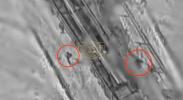
די איי.עי.עפ. האט צעשטערט איראנע ארויסשיסער אין מערב איראן.
גאלערי
ווידעאס
The Israeli Air Force carried out a series of precision airstrikes in western Iran targeting Islamic Revolutionary Guard Corps missile launchers and associated personnel, according to infrared drone footage released by the Israel Defense Forces. The imagery shows multiple explosions along desert convoy routes, consistent with mobile launch platforms and support vehicles being struck during movement and deployment phases.
Israeli military officials stated that the operation resulted in the neutralization of several missile launch systems as well as a number of air defense assets positioned to protect them. By focusing on mobile convoys rather than fixed installations alone, the strikes were designed to disrupt Iran’s ability to rapidly deploy ballistic missiles and to complicate efforts to reposition launchers for retaliatory attacks. The IDF reported that a total of 11 air defense systems were disabled in the broader wave of operations, further expanding aerial freedom of action for follow-on missions.
The strikes form part of Operation Roaring Lion, a coordinated campaign involving Israeli and U.S. forces aimed at degrading Iran’s missile production, launch capacity, and defensive networks. Military planners view these components as central to Tehran’s strategy of projecting power and deterring adversaries through long-range strike capabilities. By targeting both the launch platforms and the protective air defense layers, Israeli forces sought to dismantle the operational chain required to execute missile attacks.
Analysts note that the use of real-time drone surveillance and precision-guided munitions reflects a doctrine of proactive threat elimination. Mobile missile convoys present a significant challenge due to their ability to disperse and conceal themselves, but sustained intelligence coverage enables identification of movement patterns and engagement at vulnerable moments. The destruction of such assets before they reach launch-ready positions reduces pressure on missile defense systems and limits the scale of potential barrages.
The operation represents a further escalation in the direct confrontation between Israel and Iran, moving beyond proxy engagements to sustained strikes on core military infrastructure. Israeli officials have framed these actions as necessary to prevent the deployment of weapons capable of reaching Israeli territory and to maintain strategic deterrence.
As the campaign continues, the focus on missile launchers and air defense systems highlights the central role of airpower and intelligence integration in shaping the operational environment. The ability to locate, track, and neutralize mobile threats deep inside hostile territory underscores Israel’s emphasis on preemptive defense and sustained aerial superiority in the face of evolving regional challenges.
