דזשעק סמיט באהויפטעט אז די ערשטע אמענדמענט האט נישט באשיצט טראמפ.
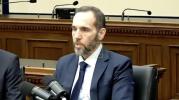
Former Special Counsel Jack Smith testified behind closed doors that the First Amendment did not protect President Donald Trump’s right to question the outcome of the 2020 election, a claim that has reignited debate over free speech, political dissent, and the limits of prosecutorial power.
In a December 2025 deposition before the House Judiciary Committee, Smith argued that while Americans — including presidents — are generally protected when expressing doubts about elections, that protection ends when speech is allegedly used to advance what he described as “knowing falsehoods” aimed at obstructing official government proceedings. The testimony was released publicly on December 30, 2025, in a 255-page transcript.
Smith’s position centers on his justification for charging President Trump with conspiracy to defraud the United States. According to Smith, the case was not about political speech or disagreement with election results, but about intent. He claimed Trump knowingly promoted false claims of widespread fraud in order to interfere with lawful government functions, specifically the certification of electoral votes.
To support this argument, Smith cited Supreme Court precedent, including Illinois ex rel. Madigan v. Telemarketing Associates (2003), which held that fraudulent speech intended to deceive for material gain is not protected by the First Amendment. Smith attempted to draw a legal distinction between historical election disputes — such as those in 1800 or 2000 — and Trump’s actions, which he characterized as targeting the constitutional process itself rather than seeking resolution through established legal channels.
Critics argue that Smith’s reasoning dangerously narrows First Amendment protections, particularly in the political arena. Questioning election integrity, they note, has long been part of American political discourse, including challenges raised by Democrats in multiple past elections. They warn that redefining such challenges as criminal fraud sets a precedent that could chill free speech and empower future prosecutions against political opponents.
Supporters of President Trump contend that Smith’s testimony reinforces concerns that the case was less about law enforcement and more about criminalizing dissent. They point out that determining “intent” behind political speech is inherently subjective and vulnerable to abuse, especially when applied selectively.
The release of Smith’s testimony has intensified scrutiny of the legal theories used against President Trump and fueled broader concerns about the weaponization of the justice system. As investigations into prosecutorial conduct continue, the question remains whether robust political speech — even when controversial or disputed — can survive under an increasingly aggressive interpretation of federal law.
גאלערי
ווידעאס
