בעידזשינג פירט דורך א געלונגענעם קענסעל טעסט פאר א קאמאנדע לבנה ראקעט.
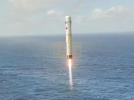
China has completed a significant milestone in its human spaceflight program with a successful February 11, 2026 test of the Long March-10 launch vehicle and the emergency escape system for its next-generation Mengzhou crew capsule. The trial represents a critical step toward Beijing’s stated objective of conducting a crewed lunar landing by 2030.
According to official releases from the China Manned Space Agency, the test validated key safety and recovery systems, including the first-stage booster’s controlled descent and splashdown in the Yellow Sea. Video footage from the event shows the rocket stage executing a landing burn prior to vertical water impact, a maneuver that closely resembles reusable booster recovery techniques pioneered by private U.S. aerospace firms. The visual similarity has fueled discussion among observers about global convergence in launch system design and reusability strategies.
Equally significant was the validation of the Mengzhou capsule’s emergency abort system. Crew escape capability is a foundational safety requirement for human-rated launch systems, enabling astronauts to separate rapidly from a malfunctioning rocket during ascent. Successful demonstration of this system strengthens confidence in China’s readiness to move toward crewed deep-space missions.
The Long March-10 is designed as a heavy-lift rocket capable of supporting lunar mission architectures, including crew transport and cargo deployment. The program forms the backbone of China’s expanding lunar ambitions, which include establishing a sustained presence on or near the Moon in coordination with international partners.
Strategically, this development narrows the technological gap between China’s lunar timeline and ongoing U.S. Artemis program efforts. As major space powers accelerate lunar exploration initiatives, advancements in launch vehicle reliability, crew safety, and potential reusability are increasingly central to long-term competitiveness.
The successful trial underscores China’s methodical approach to scaling up human spaceflight capability. With abort systems validated and booster recovery maneuvers demonstrated, Beijing has cleared another major hurdle on its path toward a 2030 lunar landing objective.
As the global space race intensifies, milestones like this reflect not only engineering progress but also broader geopolitical competition in space exploration, technology leadership, and long-duration extraterrestrial operations.
גאלערי
ווידעאס
