איזראעלי אויסערן מיניסטער סער אנטפלעקט די פאלעסטינישע אויטאריטעט "צאלן פאר טויט" בײם יו ין קאונסיל.
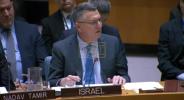
Israel’s Foreign Minister Gideon Sa’ar delivered a forceful address at the United Nations Security Council on February 20, 2026, accusing the Palestinian Authority of continuing its longstanding policy of providing financial stipends to imprisoned militants and the families of attackers. According to figures presented during the session, the payments totaled more than $200 million in 2025, even as the Palestinian Authority faced mounting fiscal constraints and reduced overall budget capacity.
Sa’ar argued that the allocation of funds to individuals convicted of terrorism constitutes a direct violation of the Oslo framework and undermines prospects for stability and negotiated coexistence. He emphasized that the structure of the payment system, in which stipends increase based on the severity of the offense and length of imprisonment, creates what Israel describes as a perverse incentive that rewards acts of violence rather than discouraging them. Israeli officials maintain that this policy institutionalizes incitement and diverts limited public resources away from civilian governance and economic development.
The issue has long been a point of contention in international diplomacy. The United States previously enacted the Taylor Force Act in 2018, which restricts certain forms of direct financial assistance to the Palestinian Authority unless the stipend program is terminated. Recent reporting indicates that the total disbursement for 2025 reached approximately $214 million, marking an increase compared to previous years and reinforcing concerns among Israeli and American policymakers that the program remains a core budgetary priority for Ramallah.
Palestinian officials have historically defended the payments as social welfare support for families affected by the conflict, framing them as part of a broader system of prisoner assistance rather than an endorsement of violence. However, Israel rejects that characterization, asserting that the scaling of payments according to attack severity demonstrates an explicit link between financial reward and militant activity. Sa’ar told council members that continuing the program during a period of fiscal austerity illustrates the leadership’s strategic priorities and raises serious questions about its commitment to counterterrorism obligations.
The presentation at the Security Council forms part of a wider Israeli diplomatic effort to spotlight what it views as structural drivers of radicalization within Palestinian governance. Israeli representatives have called on donor states and international institutions to condition financial support on the termination of the stipend mechanism and the implementation of reforms that promote transparency and accountability in public spending.
The debate is likely to intensify as international stakeholders assess both humanitarian funding needs and security concerns. While some governments emphasize the importance of sustaining economic stability in the Palestinian territories, others argue that continued payments tied to individuals convicted of attacks undermine confidence-building measures and complicate efforts to revive a viable political process.
Sa’ar’s remarks underscore the broader challenge facing diplomatic initiatives in the region: reconciling competing narratives about responsibility, incentives, and the prerequisites for lasting peace. As discussions continue within multilateral forums, the question of how financial policies intersect with security obligations remains central to the prospects for meaningful progress.
גאלערי
ווידעאס
