די קריג דעפארטמענט טעסט דראונס אונטער די טראמפ ריפארעמס
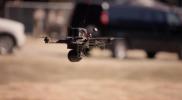
The United States military has launched a major effort to transform the future of battlefield warfare through the War Department’s ambitious “Drone Dominance” program, a sweeping initiative designed to integrate massive numbers of low-cost attack drones across the armed forces. The program took a significant step forward with the launch of the Gauntlet I competition, a large-scale evaluation of drone swarm technologies aimed at delivering rapid, scalable combat capabilities for modern conflicts.
The initiative is part of a $1.1 billion defense program focused on fielding more than 200,000 low-cost attack drones by 2027. Military planners say the goal is to dramatically expand the United States’ ability to deploy unmanned systems capable of overwhelming enemy defenses through coordinated swarming tactics. The concept draws heavily from the lessons of the war in Ukraine, where inexpensive drones have reshaped modern combat by enabling forces to strike armored vehicles, artillery, and infrastructure with unprecedented speed and precision.
Gauntlet I began last December and entered a critical phase at Fort Benning between mid-February and early March, where U.S. troops tested competing drone platforms in realistic operational scenarios. Twenty-five vendors participated in the trials, including defense technology firms such as Kratos SRE and Teal Drones. Each company demonstrated how their systems could function in coordinated swarms, conducting reconnaissance, targeting, and simulated attack missions designed to replicate battlefield conditions.
Military evaluators assessed each platform based on speed, reliability, operational flexibility, and the ability to scale production quickly. One of the program’s core objectives is affordability. Rather than relying solely on expensive high-end systems, the Drone Dominance strategy emphasizes mass production of relatively inexpensive drones that can be deployed in large numbers. By saturating an adversary’s defenses with hundreds or even thousands of unmanned systems, commanders aim to create a tactical advantage that would be difficult for enemy forces to counter.
The most promising companies emerging from the Gauntlet I trials are expected to receive contracts worth approximately $150 million to develop prototype systems for further testing and refinement. Those prototypes could form the foundation of the next generation of American drone warfare capabilities, ultimately feeding into large-scale procurement as the military prepares for future conflicts involving peer competitors.
Oversight of the program falls under Under Secretary for Research and Engineering Emil Michael, a former Silicon Valley executive who previously served in a leadership role at Uber before entering government service in 2025. Michael has emphasized speed and technological innovation as central pillars of the initiative, reflecting a broader push by the Trump administration to modernize defense procurement and accelerate the adoption of emerging technologies.
Drawing on his experience in the technology sector, Michael has highlighted the importance of leveraging private-sector innovation to strengthen U.S. national security. He has repeatedly stated that scaling and integrating drones across the joint force will provide a decisive battlefield advantage, particularly in a strategic environment where rival powers are investing heavily in autonomous weapons systems and artificial intelligence.
The program also unfolds against the backdrop of intensifying global competition in defense technology. The United States faces growing drone capabilities from adversaries such as Iran, as well as rapid technological advancements from China’s defense industry. Military leaders warn that failing to adapt quickly could allow rivals to gain an advantage in autonomous warfare, a domain increasingly viewed as critical to future military dominance.
Online reaction to the program has been swift, with defense analysts and technology observers closely tracking the competition. Some investors have expressed excitement about potential opportunities in the rapidly expanding drone sector, while others have raised concerns about the role of foreign competitors and supply chain vulnerabilities in the development of next-generation unmanned systems.
Despite the debate, Pentagon officials say the central objective remains clear: ensuring that American forces maintain technological superiority on the battlefield. By rapidly developing and deploying large numbers of coordinated drones, the Drone Dominance initiative aims to reshape how wars are fought, giving U.S. forces the ability to conduct surveillance, strike targets, and disrupt enemy operations at an unprecedented scale.
As Gauntlet I concludes and the next phase of development begins, the results of the competition will help determine which technologies will power the United States’ drone fleets in the coming years. If successful, the initiative could mark a fundamental shift in military strategy, ushering in an era where swarms of intelligent unmanned systems play a central role in securing American and allied battlefield superiority.
גאלערי
ווידעאס
