סענאטאר קענעדי ווארנט אז איראן וועט ניצן יעדע וואפן וואס זי באקומט.
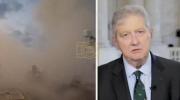
Senator John Kennedy delivered a blunt and colorful defense of the United States’ military strikes on Iran, arguing that President Donald Trump’s decision to target key nuclear facilities was justified in the face of what he described as a dangerous and unpredictable regime. During a televised interview, the Louisiana senator compared Iran’s leadership to the deranged character portrayed by Jack Nicholson in the classic thriller film “The Shining,” using the analogy to emphasize his view that the Iranian regime’s ideological extremism makes it uniquely dangerous on the global stage.
Kennedy stated that Iran’s leadership has repeatedly demonstrated hostility toward nations and individuals who do not share its political or religious views. In his remarks, he argued that a regime driven by such motivations cannot be trusted with advanced weapons capabilities, particularly nuclear technology. According to the senator, allowing Iran to continue expanding its nuclear program would pose a direct threat not only to Israel and the United States but also to broader international stability.
The comments were made in the context of the U.S. military operations conducted in June 2025, when American forces launched coordinated strikes against three major Iranian nuclear facilities: Fordow, Natanz, and Esfahan. Those operations took place during what has become known as the Twelve-Day War, a short but intense period of confrontation between Iran and a coalition led by the United States and Israel. The strikes targeted infrastructure believed to be central to Iran’s uranium enrichment program and nuclear development capabilities.
Kennedy echoed those arguments during his interview, emphasizing that decisive action was necessary because Iran has consistently pursued military capabilities while simultaneously threatening its adversaries. In his view, the regime’s willingness to expand its weapons programs while issuing aggressive rhetoric leaves little room for complacency. He argued that any government openly hostile to democratic nations should not be allowed to reach a point where it could deploy nuclear weapons.
The senator’s remarks also referenced ongoing debates about the long-term impact of the strikes. While official statements initially suggested the operation had effectively crippled Iran’s nuclear program, subsequent intelligence assessments indicated that the strikes may have delayed, rather than permanently eliminated, Tehran’s nuclear development efforts. Reports suggested that Iran resumed certain uranium enrichment activities not long after the conflict, fueling continued international concern.
These developments have intensified discussions in Washington and among allied governments about how best to address Iran’s nuclear ambitions moving forward. Supporters of the strikes argue that even temporary delays can be strategically valuable, buying time to pursue diplomatic solutions while preventing rapid nuclear advancement. Critics, however, warn that military action alone may not fully eliminate the threat if Iran retains the technical knowledge and infrastructure needed to rebuild its program.
גאלערי
ווידעאס
