צה"ל עלימינירט באוואפנטע אגענטן וואס פארלעצן דעם וואפן שטילשטאנד אין עזה.
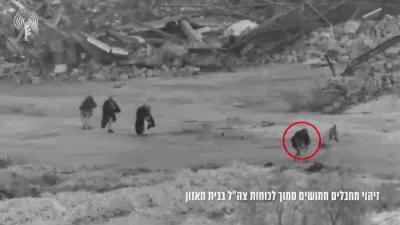
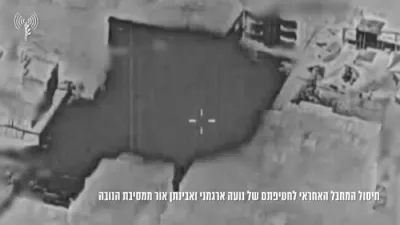
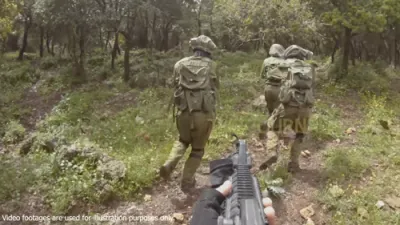
The Israel Defense Forces carried out an airstrike in northern Gaza after armed Palestinian operatives emerged from a tunnel and advanced toward Israeli troops positioned near the ceasefire’s designated Yellow Line buffer zone. According to the IDF, at least two militants were killed in the initial engagement, with additional casualties possible as forces continued to conduct sweeps for remaining threats in the area.
Israeli officials described the incident as a “blatant violation” of the ceasefire framework established in January 2026, which includes phased hostage releases and the facilitation of humanitarian aid corridors. The appearance of armed operatives outside tunnel infrastructure and their movement toward Israeli positions was assessed as an immediate tactical threat, prompting a rapid aerial response aimed at neutralizing the cell before it could carry out an attack.
The strike targeted a structure in which the militants were believed to be operating after exiting the tunnel network. The IDF stated that the action was conducted in accordance with operational protocols designed to prevent harm to Israeli forces and nearby civilians, emphasizing that the objective was the elimination of active combatants engaged in hostile activity. Israeli military sources reported no civilian casualties from the strike, while Palestinian health officials provided differing casualty figures that were not independently verified.
This confrontation represents an early stress test for the current ceasefire arrangement. Despite territorial setbacks, militant organizations in Gaza retain portions of their underground infrastructure, enabling continued movement of personnel and materiel. The persistence of tunnel-based operations complicates enforcement of the truce and increases the likelihood of localized escalations even as broader political mechanisms remain in place.
The IDF reiterated that any attacks on Israeli troops or civilian communities would be met with immediate and decisive force, framing the response as a defensive measure intended to preserve the integrity of the ceasefire. Military analysts note that maintaining deterrence in the buffer zone is a central component of Israel’s post-ceasefire security posture, particularly in areas where proximity between opposing forces creates heightened risk of rapid engagement.
As operations continue to secure the area and monitor for additional tunnel activity, the incident highlights the fragile nature of the current calm and the challenges of implementing a ceasefire in an environment where armed groups retain residual capabilities. The coming period will likely determine whether enforcement actions and diplomatic mechanisms can prevent further violations and stabilize conditions along the Gaza perimeter.