טראמפ וויצלט זיך איבער די יו ען טעלעפראמפטער
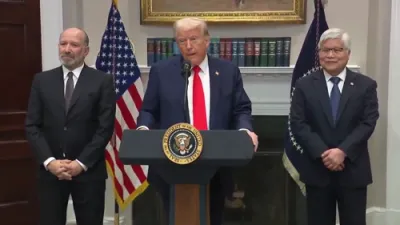
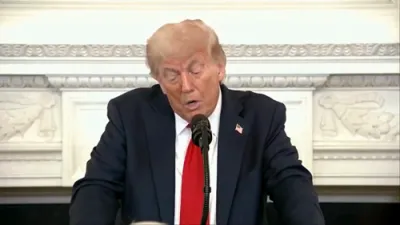
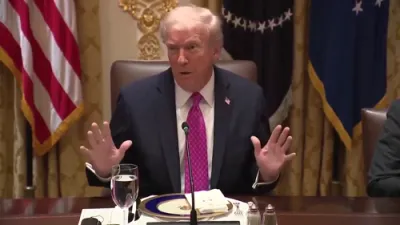
President Donald Trump delivered a characteristically unscripted moment while reflecting on his recent appearance at the United Nations, recounting a series of technical malfunctions that forced him to abandon prepared remarks and rely on improvisation. Speaking to an audience in Washington, Trump said his teleprompter failed as he took the podium, requiring him to deliver the address without scripted guidance, an approach he framed as both a challenge and a demonstration of his ability to speak directly.
The president also described an earlier logistical issue involving a stalled escalator as he arrived at the venue, attributing the sudden stop to a safety mechanism and joking about the awkwardness of the moment. He credited First Lady Melania Trump, whom he described as his “movie star first lady,” with being directly ahead of him and providing a point of balance as he steadied himself when the escalator halted. The anecdote drew laughter from the audience and was presented in a lighthearted tone that blended humor with criticism of what he portrayed as repeated operational problems during his UN visit.
The teleprompter malfunction itself had practical implications for the speech, prompting Trump to shift into an ad-libbed delivery style. Supporters have argued that this format allows him to communicate more authentically and respond in real time, while critics maintain that prepared text provides greater diplomatic precision in multilateral settings. Trump used the episode to underscore his broader skepticism toward UN bureaucracy, suggesting that the technical issues symbolized what he views as inefficiency within the institution.
UN officials previously indicated that the escalator stoppage was triggered by a routine safety protocol, reportedly activated when a member of a media team stepped too close to a sensor. Despite that explanation, Trump reiterated his belief that the sequence of malfunctions reflected poorly on event management. The comments come amid a continuing debate over the role of the United Nations in global governance and the appropriate level of U.S. engagement.
From a communications standpoint, the president’s retelling served multiple purposes: it reinforced his public persona as a speaker comfortable without scripted assistance, provided a humorous anecdote that resonated with supporters, and reiterated longstanding criticisms of multilateral institutions. The combination of personal storytelling and institutional critique has been a consistent feature of Trump’s rhetorical style, particularly when addressing forums he views as emblematic of international bureaucracy.
While the incidents themselves were logistical in nature, the president’s framing transformed them into a narrative about resilience, spontaneity, and skepticism toward global organizations. By presenting the experience as both comedic and emblematic of broader concerns, Trump used a minor technical disruption to reinforce themes that have defined his approach to international engagement.