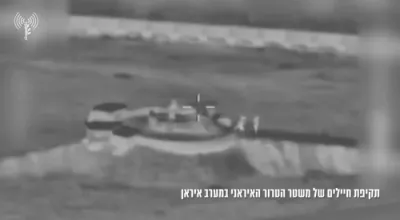
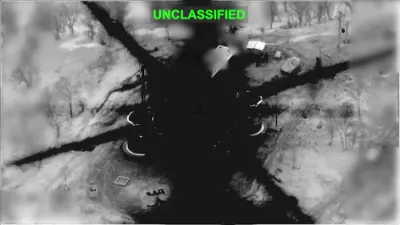
איי.עי.עפ. צעשטערט איראנישן ראקעט לאנטשער פארן ארויסשיסן.
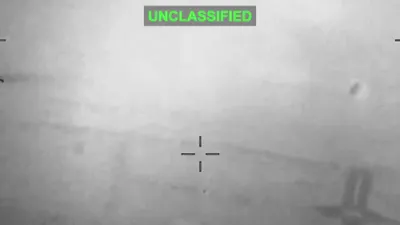
The Israeli Air Force conducted a preemptive precision strike that destroyed an Iranian surface-to-surface missile launcher in western Iran moments before it was set to fire, according to infrared footage released by the Israel Defense Forces. The operation, carried out under the broader framework of Operation Roaring Lion, reflects Israel’s doctrine of intercepting imminent threats at their point of origin rather than relying solely on defensive systems after launch.
Military officials stated that the launcher had been tracked through a combination of signals intelligence, aerial surveillance, and real-time targeting data, allowing Israeli aircraft to engage the platform during its final launch preparations. The timing of the strike—occurring seconds before ignition—demonstrates a high level of operational synchronization between intelligence collection and strike execution. By eliminating the launcher prior to launch, the Israeli Air Force prevented a potential strike on Israeli population centers and reduced the need for interception by missile defense systems.
The action forms part of a large-scale campaign that has involved approximately 200 aircraft striking more than 500 Iranian military assets, including missile infrastructure, air defense networks, and facilities linked to strategic weapons development. Israeli defense officials have emphasized that the objective is to degrade Iran’s capacity to conduct long-range attacks and to disrupt the command structure responsible for coordinating missile operations. Reports indicating the deaths of dozens of senior Iranian military commanders during the initial waves suggest that the strikes were designed not only to target hardware but also to impair operational leadership and decision-making chains.
Iran responded with retaliatory missile fire toward northern Israel, including launches in the direction of Haifa, while explosions were reported in Tehran amid continued Israeli targeting of military infrastructure. The exchange marks a significant shift from the long-standing pattern of indirect confrontation through regional proxies to direct state-on-state engagement. Analysts note that this transition increases both the strategic risks and the potential for rapid escalation, as each side seeks to restore deterrence while avoiding a wider regional war.
From Israel’s perspective, the preemptive destruction of missile launchers is central to maintaining strategic depth and protecting civilian areas from saturation attacks. The ability to locate, track, and neutralize mobile launch platforms inside hostile territory highlights the integration of intelligence, airpower, and precision-guided munitions that defines modern Israeli operational planning. It also signals to adversaries that missile forces, long viewed as a primary deterrent tool, are increasingly vulnerable to real-time targeting.
As Operation Roaring Lion continues, the balance between offensive preemption and defensive readiness will shape the trajectory of the conflict. The successful interception of a missile threat before launch underscores Israel’s commitment to proactive defense, while the ongoing cycle of strikes and counterstrikes illustrates the fragile and rapidly evolving security environment in the region.