מדינת ישראל ווייזט אויף לופט דאמינאנץ איבער איראנער ראקעט זייטלעך.
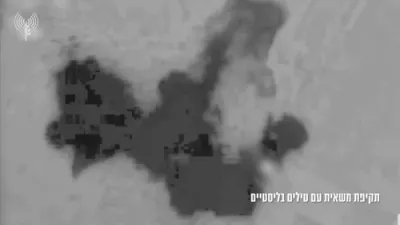
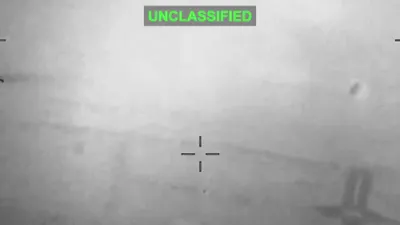
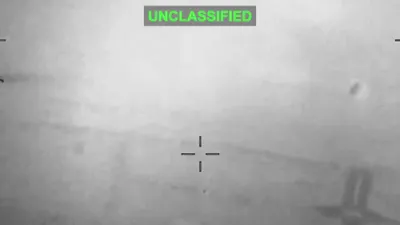
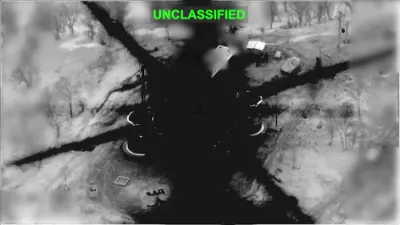
The Israel Defense Forces released infrared combat footage documenting a series of precision strikes against Iranian ballistic missile launchers, marking a significant escalation in Jerusalem’s campaign to degrade the Islamic Republic’s long-range strike capability. The videos, captured during what Israeli officials have designated as Operation Roaring Lion, show coordinated drone and airstrike activity targeting mobile launch platforms positioned in remote desert areas of western Iran.
According to the IDF, the targeted systems were affiliated with the Islamic Revolutionary Guard Corps and were actively being prepared for potential deployment. The footage depicts surveillance drones tracking isolated transport vehicles before guided munitions strike with high accuracy, resulting in the confirmed destruction of the launch assets. Hebrew operational captions embedded in the video indicate real-time target acquisition, weapons release authorization, and battle damage assessment, reflecting a tightly integrated intelligence-to-strike cycle.
Military analysts note that the ability to locate, track, and eliminate mobile ballistic missile launchers deep inside Iranian territory demonstrates a high degree of air superiority and intelligence penetration. Mobile launch systems are specifically designed to evade detection through rapid relocation and concealment, making them among the most challenging targets in modern warfare. Their systematic removal not only reduces Iran’s immediate retaliatory capacity but also disrupts command-and-control logistics tied to missile deployment.
Operation Roaring Lion appears to focus on preemptive counterforce measures aimed at neutralizing threats before launch. This doctrine aligns with Israel’s longstanding security policy that prioritizes preventing adversaries from acquiring or employing strategic weapons capable of striking Israeli population centers. By targeting launch infrastructure rather than solely storage depots, the operation seeks to impose operational paralysis on IRGC missile units and force them into a defensive posture.
The strikes come amid heightened tensions following recent direct and proxy exchanges between Israel and Iranian-backed forces across multiple theaters. Israeli defense officials have repeatedly warned that ballistic missiles represent one of the most significant threats to national security, particularly as Iran continues to expand both the range and payload capacity of its arsenal. The demonstrated reach of Israeli unmanned systems into Iranian airspace sends a dual message of deterrence and capability, signaling that geographic depth does not guarantee protection for high-value military assets.
Strategically, the release of combat footage serves multiple purposes. It provides transparency to domestic and international audiences regarding the nature of the targets, reinforces deterrence by showcasing operational effectiveness, and communicates to Tehran that its missile infrastructure remains vulnerable despite dispersal tactics. Information operations of this kind are intended to shape adversary decision-making by highlighting the costs of continued escalation.
While Iran has historically relied on its ballistic missile force as a central pillar of its deterrent strategy, the attrition of mobile launch platforms complicates its ability to conduct rapid, survivable strikes. Replacing such systems requires time, resources, and secure logistics corridors, all of which are increasingly exposed under persistent surveillance. The operational tempo suggested by the footage indicates that Israel is pursuing sustained counter-missile pressure rather than isolated raids.
As regional dynamics remain volatile, the destruction of IRGC launch assets represents a tactical success with broader strategic implications. It reduces the immediate threat envelope facing Israel, constrains Iran’s escalation options, and reinforces the principle that advanced intelligence, precision weaponry, and air dominance can decisively shape the battlefield even against geographically distant targets.