איראנישער פרעמיער מיניסטער אראכטשי זאגט אז איראן איז גרייט פאר א אמעריקאנער ערד-מלחמה.
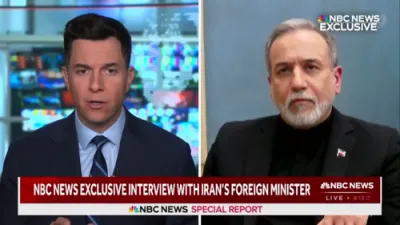
Iran’s Foreign Minister Seyed Abbas Araghchi delivered a defiant message during a televised interview, declaring that Tehran is prepared to confront American ground forces if the United States ever attempted a military invasion. In remarks that quickly drew international attention, Araghchi responded directly to a question about whether Iran fears a potential U.S. invasion by stating bluntly that the country is “waiting” for American troops.
During the interview, conducted by NBC News on March 5, 2026, the reporter pressed Araghchi on rising tensions between Washington and Tehran. When asked if Iran was concerned about the possibility of a U.S. ground invasion, the Iranian diplomat dismissed the notion of fear. Instead, he asserted that Iran would welcome such a scenario, repeating that the country is ready and waiting for U.S. forces should they attempt to enter Iranian territory.
The exchange became particularly striking when the interviewer sought clarification, asking whether he truly meant that Iran was waiting for American ground troops. Araghchi confirmed his statement without hesitation, emphasizing that Iran believes any such move would ultimately prove disastrous for the United States. His comments reflect a broader narrative frequently promoted by Iranian leaders that the country’s geography, military structure, and regional alliances would make any large-scale invasion extremely costly for outside powers.
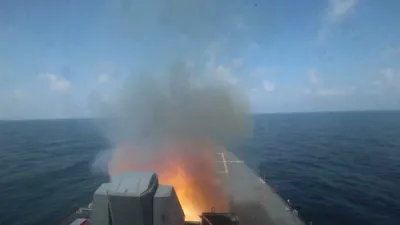
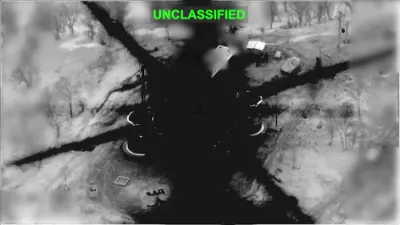
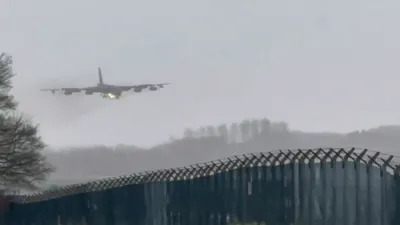
Araghchi’s remarks come at a moment of heightened tensions across the Middle East, where military activity has increased dramatically in recent weeks. Reports of U.S. military reinforcements in the region, including naval deployments and additional air assets, have fueled speculation about the possibility of a broader confrontation between Washington and Tehran. These deployments have been widely interpreted as part of a deterrence strategy designed to counter Iranian threats and protect U.S. forces and allies in the region.
American officials, however, have repeatedly stated that there are no plans for a full-scale ground invasion of Iran. Defense authorities have indicated that the current military posture is focused on deterrence, force protection, and maintaining operational readiness rather than initiating a land war. Nonetheless, Iranian leaders have used the increased U.S. presence to reinforce their narrative of resistance against foreign intervention.
Iran has long structured its military strategy around asymmetric warfare, a doctrine designed to counter technologically superior opponents. Rather than relying solely on conventional battlefield engagements, Iranian forces emphasize layered defense strategies that include missile systems, drone capabilities, naval assets in the Persian Gulf, and a network of allied militias across the Middle East. Iranian officials frequently argue that this structure would make any attempt to occupy the country extremely difficult.
In addition to its conventional military forces, Iran maintains the Islamic Revolutionary Guard Corps, a powerful military organization responsible for protecting the regime and coordinating regional operations. The Guard Corps has played a central role in developing Iran’s missile programs and supporting allied groups throughout the region, making it a key component of Tehran’s deterrence strategy.
Araghchi’s statements also reflect the broader political messaging coming from Tehran as the country faces mounting pressure from Western governments and regional rivals. Iranian leaders have consistently sought to portray themselves as prepared to confront outside military threats while warning that escalation would carry severe consequences for adversaries.
Analysts say the comments were likely intended as both domestic and international signaling. Domestically, such rhetoric reinforces the government’s image of strength and resistance. Internationally, it serves as a warning designed to discourage the United States or its allies from considering direct military action against Iran.
Despite the heated rhetoric, diplomatic channels between the United States and Iran remain active in various forms, including indirect discussions mediated by international partners. These efforts aim to prevent further escalation while addressing long-standing disputes over security issues and regional stability.
Araghchi’s bold claim that Iran is “waiting” for American ground troops highlights the intensity of the current geopolitical standoff. While officials on both sides continue to exchange warnings, the situation underscores the fragile balance between deterrence, diplomacy, and the risk of miscalculation in one of the world’s most volatile regions.