טראמפ האט זיך געשפילט מיטן B2 באמבער אינעם אוועל אפיס
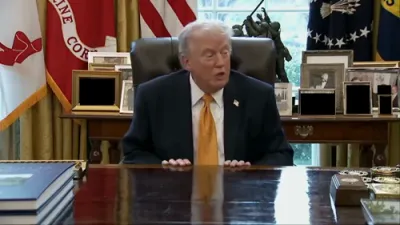
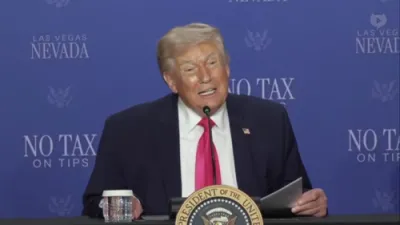
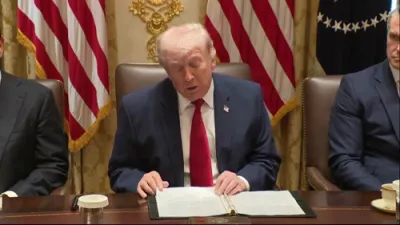
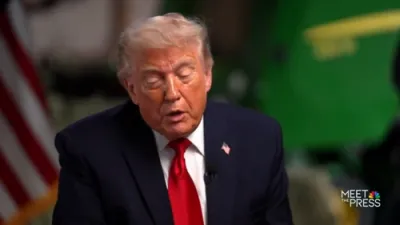
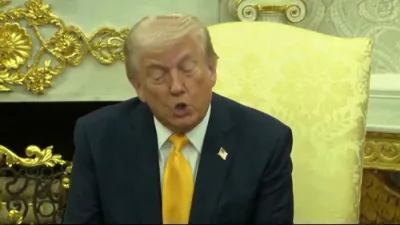
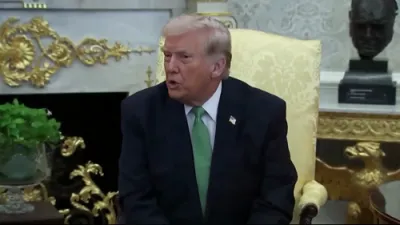
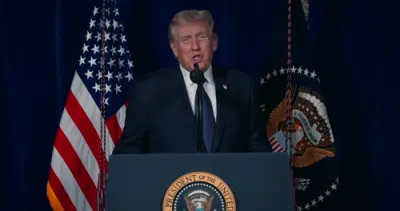
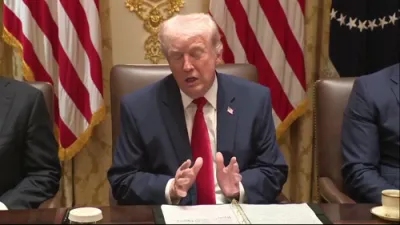
During a March 16, 2026, address in the Oval Office, President Donald Trump playfully interacted with a model of a B-2 Spirit stealth bomber, emphasizing its critical role in U.S. military operations. In his remarks, Trump affectionately hugged the bomber, jokingly referring to it as a “little sucker” and noting its impressive size in person despite its compact appearance as a model. He credited the aircraft with carrying out a midnight strike that “decimated” Iran’s nuclear program, asserting that the mission prevented an imminent weapon deployment.
The B-2 Spirit, first introduced in 1997, remains one of the most advanced stealth bombers in the U.S. arsenal. With only 20 active aircraft valued at $2.1 billion each, the B-2 can carry massive ordnance, including the 30,000-pound GBU-57 Massive Ordnance Penetrator, capable of destroying deeply buried targets undetected. Its long-range stealth capabilities have enabled precision global strikes that maintain the United States’ strategic advantage over adversaries.
Trump’s remarks combined a display of showmanship with a clear signal of deterrence. By publicly showcasing the B-2’s capabilities and referencing a successful strike against Iranian nuclear infrastructure, the president underscored the effectiveness of U.S. stealth technology while reinforcing domestic confidence in national defense readiness.
The lighthearted tone, including calling the bomber a “little sucker,” was paired with serious messaging about the United States’ ability to conduct precision strikes against high-value targets. Analysts note that such appearances serve both as morale boosters for domestic audiences and as indirect signals to adversaries regarding U.S. military reach and readiness.
In highlighting the B-2 Spirit, President Trump emphasized not only the technical sophistication of the aircraft but also its operational impact, framing the bomber as a key instrument in safeguarding American security interests. The address reflected the administration’s approach of blending rhetoric, public demonstrations, and strategic messaging to project power in a complex international environment.