נתניהו שיקט ארויס א סטראטעגיע צו אונטערמינירן דעם איראן רעזשים.
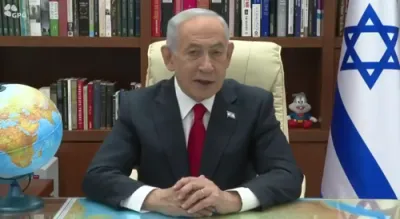
Israeli Prime Minister Benjamin Netanyahu delivered a formal address on March 17, 2026, outlining Israel’s strategy to undermine Iran’s regime and foster internal opposition. Netanyahu explicitly stated that Israel aims to create opportunities for Iranians to challenge their government, emphasizing that change will not happen overnight and will require persistent effort. He cited recent targeted operations, including the assassination of former parliament speaker Ali Larijani, as part of a broader campaign to weaken regime control and encourage defections within Iran’s military ranks.
The Prime Minister also highlighted Israel’s coordination with American allies in the Gulf, stressing that support would come both indirectly and through direct actions. Netanyahu’s remarks followed Israeli airstrikes on Tehran, which reportedly ignited fires in Revolution Square and destroyed Iranian missile facilities, according to government releases and international media reporting. These actions represent a calculated escalation aimed at disrupting Iran’s capacity to retaliate while signaling the consequences of continued aggression.
Analysts note that Netanyahu’s address underscores Israel’s willingness to engage in precision strikes and intelligence-led operations to achieve strategic objectives without triggering a full-scale war. By targeting high-value regime figures and infrastructure, Israel seeks to erode the cohesion of Iran’s leadership and encourage defections or protests among its population. The approach reflects a blend of military deterrence and psychological pressure designed to weaken Tehran from within.
The Prime Minister concluded with a warning that further operations and “surprises” are expected as the conflict continues. Observers say this signals both the persistence of Israeli strategic objectives and the potential for continued escalation, highlighting the delicate balance between coercive military action and efforts to support internal regime opposition. Netanyahu’s remarks reinforce Israel’s message that it will act decisively to protect its interests and those of its regional partners.