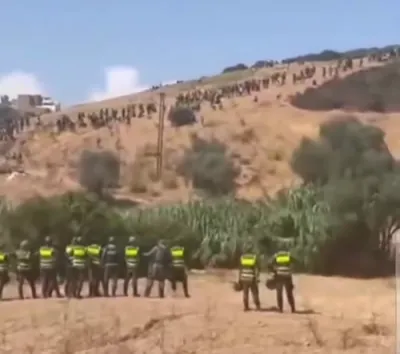
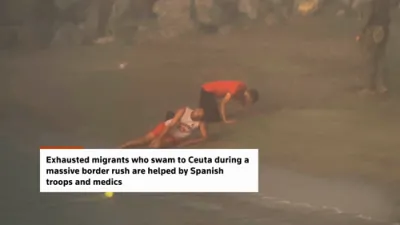
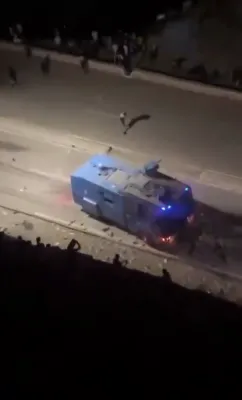
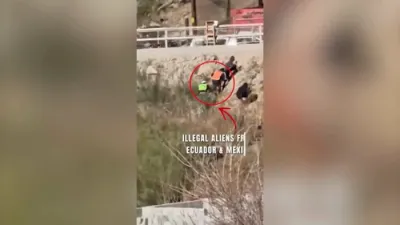
מאסן מענער אימיגראנטן פון מאראקא און אלדזשיריע שטורעמען די גרעניצן פון שפאניע
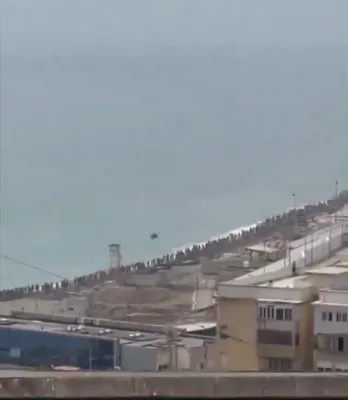
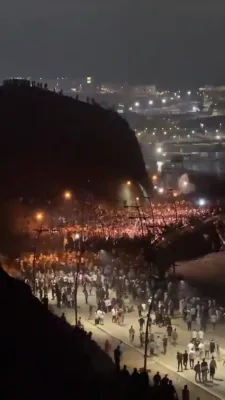
Thousands of migrants, mostly young men from Morocco and Algeria, entered Spain’s North African enclave of Ceuta on July 30 by swimming across the border and scaling the fence. The influx added to more than 1,500 arrivals by sea in the previous week and left local reception centers completely overwhelmed, with facilities for unaccompanied minors operating at over 2,000 percent of capacity. Ceuta’s president, Juan Jesús Vivas, described the situation as a national emergency and formally requested army deployment along with access to special emergency funds.
Spain’s Interior Ministry under the Sánchez government refused to declare a formal national emergency. Officials stated that existing laws limit such declarations to natural or technological disasters and do not cover migration flows. As a result, local authorities cannot access special emergency funding or deploy the military. The ministry is instead relying on standard police reinforcements and regular legal procedures while coordinating with Moroccan authorities.
This response leaves Ceuta’s overwhelmed local services without the exceptional tools its leaders say are urgently needed. Protecting national borders and ensuring public order require clear authority and decisive action. Treating a mass unauthorized entry as a routine administrative matter rather than a security crisis risks further strain on Spanish territory and sends mixed signals about the seriousness of the situation.