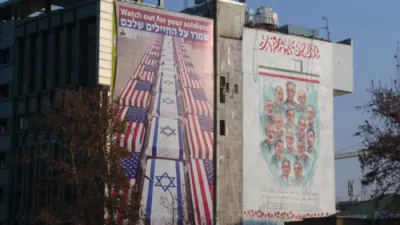
חיזבאללה איז נישט גרייט זיך צו אנטוואפענען
Hezbollah has flatly rejected calls to dismantle its advanced drone fleet and precision-guided missile arsenal, making clear that it will not trade those capabilities for de-escalation with Israel. The message, delivered without ambiguity, signals a hardening posture that significantly raises the risk of renewed conflict along Israel’s northern border.
The refusal aligns with recent remarks by Hezbollah Secretary-General Naim Qassem, who dismissed U.S. and Israeli demands to neutralize the group’s weapons stockpiles. According to Israeli defense assessments, Hezbollah is believed to possess more than 3,000 precision-guided munitions, along with an expanding arsenal of attack drones capable of reaching deep into Israeli territory.
An accompanying video circulating online shows Hezbollah operatives moving through fortified underground tunnel networks marked with Arabic signage, highlighting the group’s continued investment in concealed infrastructure designed to protect missile and drone assets from airstrikes. While some observers note that portions of the footage appear to be recycled from earlier clashes, the imagery nonetheless reinforces long-standing concerns about Hezbollah’s extensive underground capabilities.
This development comes amid mounting tension following a fragile truce. On January 5, 2026, Israeli forces carried out a targeted drone strike that killed two Hezbollah operatives accused of violating ceasefire terms. Israel has consistently warned that any attempt by Hezbollah to expand or preserve its precision weapons program represents a strategic red line.
By refusing to disarm, Hezbollah is signaling that it prioritizes military leverage over diplomatic stability. Israeli officials have long argued that the group’s missile and drone arsenal is not defensive in nature but rather designed to overwhelm civilian areas and critical infrastructure in the event of war.
For Israel, the message is unmistakable. Hezbollah’s posture leaves little room for miscalculation and underscores why Jerusalem continues to emphasize deterrence, intelligence dominance, and preemptive capability. As mutual accusations of escalation continue, the situation along the Israel–Lebanon border remains volatile, with both sides preparing for the possibility that restraint may not hold.