חאמאס פירער זאגט בטעות "פרי איזראעל" ביי א רעדע אין דוחא
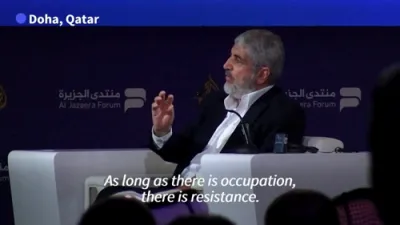
A revealing moment unfolded at the Al Jazeera Forum in Doha when senior Hamas leader Khaled Mashal made an unexpected verbal slip, momentarily declaring “free Israel” during a speech intended to promote the Palestinian resistance narrative. The remark, delivered on stage and broadcast publicly, immediately prompted intervention from the Al Jazeera host, who stepped in to clarify that Mashal meant to say “free Palestine.” Mashal quickly acknowledged the correction, repeating the intended phrase, but the brief gaffe had already drawn attention.
Mashal, Hamas’s longtime political leader who has lived in exile in Qatar since surviving a failed Mossad assassination attempt in 1997, was using the forum to reject renewed international calls for Hamas to disarm amid the ongoing conflict in Gaza. His speech followed familiar talking points, including resistance rhetoric and opposition to Israel’s existence, but the unintended phrase quickly overshadowed the rest of his remarks.
The moment spread rapidly across pro-Israel media and online platforms, where it was widely interpreted as an illustration of internal contradictions within Hamas’s ideological messaging. Critics pointed out that such a slip, even if unintentional, exposed the tension between Hamas’s absolutist public rhetoric and the realities it confronts politically and militarily. Supporters of Israel highlighted the incident as emblematic of what they argue is the incoherence and instability at the core of Hamas leadership.
While Mashal and Al Jazeera attempted to move past the comment almost immediately, the incident reinforced broader skepticism toward Hamas’s credibility and consistency. In a media environment where every word is scrutinized, especially from figures associated with designated terrorist organizations, the brief declaration resonated far beyond the forum hall. For many observers, the episode served as a small but telling moment, underscoring the growing pressure on Hamas leaders as their messaging faces increased global examination.