איראן-רוסלאנד ים-פלאט סימולירן ראטעווען פון געכאפטן שיף.
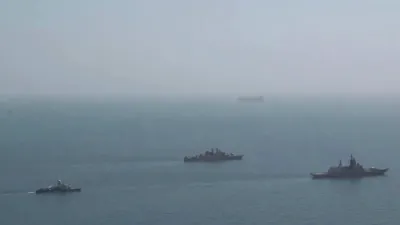
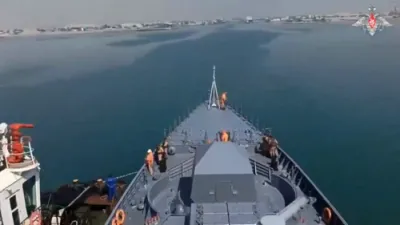
Iranian and Russian naval special forces conducted a coordinated exercise simulating the retaking of a hijacked merchant vessel during their joint maritime drills in the Gulf of Oman, highlighting the growing operational alignment between Tehran and Moscow. The exercise featured a multi-phase assault that included aerial reconnaissance, helicopter-borne insertion teams, fast-attack craft maneuvers, and close-quarters boarding operations to neutralize simulated hostile actors and secure the vessel.
State media in Iran released footage of the operation, showing synchronized movements between IRGC naval commandos and Russian naval personnel. The scenario replicated a high-risk maritime interdiction environment in which special forces units must rapidly establish air and surface dominance before boarding and clearing a target ship. Such drills are designed to improve interoperability, communications, and tactical coordination between participating forces.
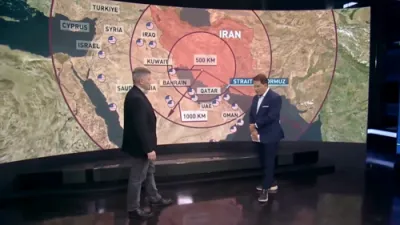
The exercise forms part of the broader Maritime Security Belt 2026 series, which has previously included China and is framed by participating states as an effort to enhance maritime security and counter piracy. However, the timing and location of the drills—near critical shipping lanes that connect to the Strait of Hormuz—give them strategic significance beyond the stated anti-piracy mission. A substantial portion of global energy shipments transits these waters, making any military activity in the area a matter of international concern.
The joint operation comes amid heightened regional tensions and an increased U.S. military presence, including carrier strike groups positioned to deter potential Iranian actions and protect commercial navigation. The convergence of multiple naval forces operating in proximity underscores the complexity of the current maritime security environment, where overlapping exercises and deployments carry both signaling and operational implications.
For Iran and Russia, the drills serve several purposes. They demonstrate a capacity for joint action in contested maritime zones, reinforce political messaging about strategic partnership, and provide practical training for special operations forces in scenarios involving asymmetric threats. For outside observers, the exercises are viewed as part of a broader pattern of defense cooperation that has expanded across naval, aerial, and technological domains in recent years.
While officially presented as defensive and security-oriented, the optics of coordinated special forces assaults and integrated command structures contribute to perceptions of an emerging counterbalance to Western naval influence in the region. The inclusion of advanced tactics such as helicopter insertions and rapid boarding techniques indicates a focus on high-readiness maritime interdiction capabilities.
As geopolitical competition intensifies around key sea lanes, exercises of this nature function both as training events and strategic messaging tools. The simulated retaking of a hijacked vessel illustrates the operational ambitions of the participating forces and underscores the evolving security dynamics in one of the world’s most vital maritime corridors.