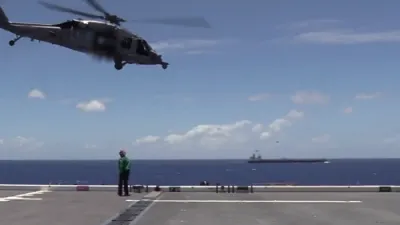
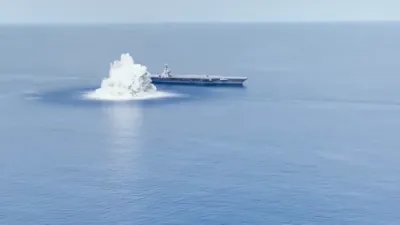
אמעריקאנע מיליטערישע טעסק פארס מאכט חרוב א דראג שיף אויפן ים.
U.S. Southern Command forces conducted a precision maritime strike in the Caribbean on February 23, destroying a vessel identified as part of a narco-trafficking network with alleged links to designated terrorist organizations. According to official statements, the targeted craft was operating along established drug-smuggling corridors originating from South America when it was engaged by Joint Task Force Southern Spear. The action resulted in the deaths of three suspected operatives, while no U.S. personnel were injured.
Command authorities stated that the operation followed intelligence confirming the vessel’s involvement in narcotics trafficking activities that finance transnational criminal and extremist networks. The strike forms part of Operation Southern Spear, an ongoing campaign initiated in late 2025 to disrupt maritime drug routes that serve as primary conduits for illicit substances entering North American markets. Military planners have increasingly characterized these networks as hybrid threats, citing their use of paramilitary tactics, encrypted communications, and coordination with armed groups in unstable regions.
Since the launch of the operation, U.S. forces have conducted dozens of interdiction and strike actions across key maritime transit zones. Officials report that the campaign is designed to degrade the logistical infrastructure of trafficking organizations by targeting vessels, staging points, and support assets before shipments reach distribution hubs. The use of precision kinetic force at sea reflects an expanded counter-narcotics posture that blends traditional law-enforcement objectives with counter-terrorism frameworks.
Supporters of the strategy argue that maritime disruption is essential to reducing the flow of fentanyl precursors and other synthetic narcotics that contribute to overdose deaths in the United States. By interdicting shipments closer to their source, the operation aims to impose higher costs on trafficking networks and limit their operational freedom. Advocates also emphasize the absence of U.S. casualties in the latest strike as evidence of effective intelligence preparation and force protection.
Critics, however, have raised concerns about the broader implications of lethal force in counter-drug missions, including questions surrounding target verification, potential collateral risk in busy sea lanes, and the long-term effectiveness of decapitation tactics against decentralized trafficking structures. They argue that without parallel economic and institutional measures in source countries, interdiction alone may shift routes rather than eliminate supply.
Military officials maintain that all actions are conducted under established rules of engagement and with layered intelligence assessments to minimize unintended consequences. They also note that the maritime domain provides a controlled operational environment compared to urban interdictions, allowing for clearer identification of hostile vessels engaged in illicit activity.
The February 23 strike underscores the evolving role of U.S. forces in combating transnational narcotics networks, reflecting a strategy that treats cartel-linked maritime operations as national security threats rather than solely criminal enterprises. As Operation Southern Spear continues, its effectiveness will likely be measured by sustained disruption of trafficking flows and the ability to limit the financial lifelines of organizations that operate across both criminal and extremist spheres.