איראן שיסט באליסטישע ראקעטן אויף מדינת ישראל און גאלף באזעס.
The conflict involving Iran, Israel, and the United States intensified sharply as Iran launched its 41st wave of missile attacks, targeting Israeli cities and American military installations across the Middle East. The barrage included more than ten heavy ballistic missiles fired under what Iranian officials have described as “Operation True Promise 4,” marking another escalation in the war that erupted in late February.
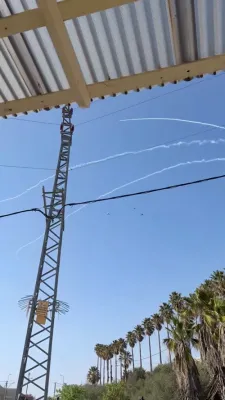
According to reports and footage released by Iranian sources, the missiles were launched from desert locations and included several of Iran’s most advanced long-range systems. Among the weapons reportedly used were the Khorramshahr-4, Qadr, and Kheybar-Shekan ballistic missiles, along with Iran’s hypersonic Fattah missile variant. Video released on March 12 shows multiple launch vehicles igniting in sequence, sending missiles into the sky as bright flames and long contrails streak across the desert landscape.
Iranian state media claims the targets included major Israeli population centers such as Tel Aviv and Jerusalem, as well as U.S. military facilities in the United Arab Emirates and Iraq. Additional targets were reportedly associated with strategic infrastructure in Dubai and Kuwait, reflecting the widening geographic scope of the confrontation.
Israeli defense systems responded quickly to the attack. Military officials reported that the majority of incoming projectiles were intercepted by Israel’s multilayered missile defense network, including the Iron Dome system. Despite the large number of missiles launched, only limited impacts were reported, and early assessments indicated that most threats were neutralized before reaching their intended targets.
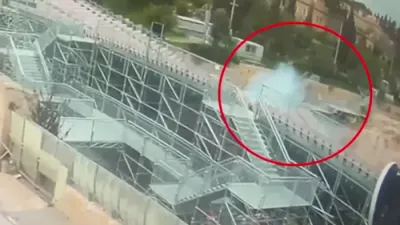
One missile reportedly landed within several hundred meters of Jerusalem’s most sensitive religious sites, an area that includes landmarks revered by multiple faiths. Authorities said no casualties were reported from that incident, but the proximity of the strike heightened concerns about the potential consequences of continued missile attacks near one of the world’s most historically and spiritually significant locations.
The Israeli military also acknowledged that its emerging Iron Beam laser defense system—designed to use high-energy laser technology to intercept certain aerial threats—is not yet operational against long-range ballistic missiles fired from distances such as those involved in Iranian launches. As a result, Israel continues to rely primarily on interceptor missiles within its established defense architecture to counter these attacks.
The missile barrage comes amid a pattern of near-daily Iranian strikes intended to test and potentially overwhelm defensive systems. Analysts say that firing multiple missiles in rapid succession can saturate missile defense networks, increasing the chances that some projectiles may slip through interception layers. This tactic has been widely discussed by military experts studying missile warfare in modern conflicts.
International reactions to the latest escalation have been swift. The United Nations Security Council issued Resolution 2817 condemning the missile attacks and urging de-escalation by all parties involved in the conflict. Diplomatic efforts are ongoing, though the pace of military developments continues to outstrip negotiations.
Meanwhile, several governments are taking precautionary measures to protect their diplomatic personnel. Australia announced the withdrawal of non-essential diplomats from several locations in the region as tensions continue to rise. Officials cited security concerns and the unpredictable nature of the ongoing conflict as reasons for the move.
Casualty figures remain contested, with both Iranian and Israeli sources presenting conflicting claims regarding the effectiveness and damage of recent strikes. Independent verification has proven difficult due to the rapidly evolving situation and the highly sensitive nature of military operations on both sides.
Military analysts note that the inclusion of hypersonic missile variants in the latest attack wave represents a significant technological development. Hypersonic weapons are designed to travel at extremely high speeds while maneuvering during flight, potentially making them more difficult for conventional missile defense systems to intercept.
As missile launches continue and retaliatory strikes remain ongoing, the conflict shows little sign of slowing. The steady escalation—marked by advanced missile deployments, daily barrages, and expanding regional involvement—suggests that the confrontation between Iran, Israel, and their allies is entering a prolonged and increasingly dangerous phase.