אמעריקאנער מיליטער האט ארויסגעשאסן מיסילס אויף אן אויל טאנקער וואס איז געווען אויפ'ן וועג קיין קארג איילענד.
CENTCOM Fires Hellfire Missiles Into Tanker's Smokestack — U.S. Aircraft Stops M/T Belma Dead in Its Tracks Bound for Iran
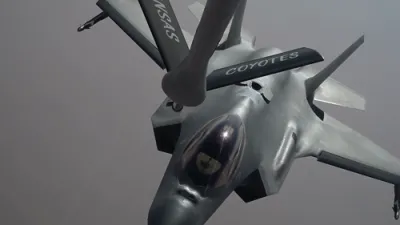
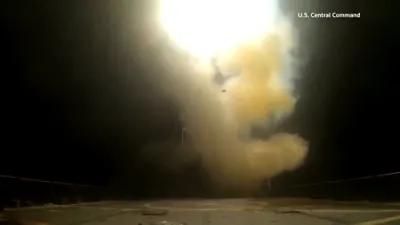
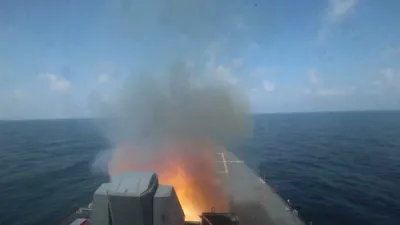
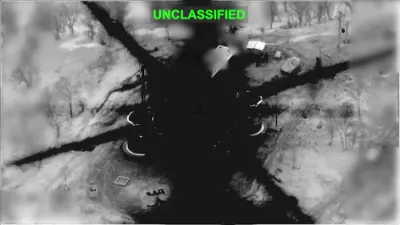
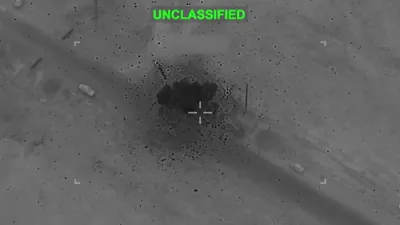
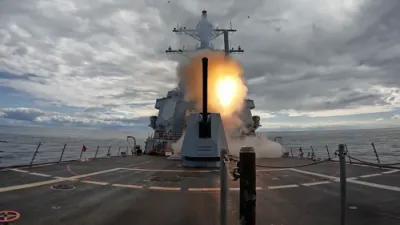
U.S. Central Command has confirmed that an American aircraft fired Hellfire missiles directly into the smokestack of the Curacao-flagged oil tanker M/T Belma after the vessel repeatedly and defiantly ignored warnings to stop while making its way toward Iran's Kharg Island — one of the Islamic Republic's most strategically vital oil export terminals. The precision strike, surgically targeted at the ship's smokestack to disable its propulsion without sinking the unladen vessel, brought the tanker to a dead stop in the water and prevented it from completing its run to the Iranian port. According to the U.S. military, the M/T Belma was given multiple clear opportunities to comply with American warnings before the decision was made to fire, leaving zero ambiguity about who bears responsibility for the consequences. This is what enforcement of a naval blockade looks like when America is serious — and under President Trump, America is deadly serious.
The choice to target the smokestack rather than the hull or fuel systems reflects a level of tactical precision and deliberate restraint that speaks volumes about the professionalism of U.S. forces executing the blockade. Rather than sinking the vessel outright or risking a catastrophic oil spill in strategically sensitive waters, CENTCOM's aircraft delivered a pinpoint Hellfire strike calculated to neutralize the tanker's ability to proceed without escalating into an uncontrolled maritime disaster. The M/T Belma, sailing under a Curacao flag and traveling unladen toward Kharg Island, had every opportunity to heed the warnings of the most powerful military force on earth — and chose defiance instead. That choice has consequences, and CENTCOM delivered those consequences with the kind of precision and restraint that separates American military power from the indiscriminate aggression of the regimes it opposes.
The disabling of the M/T Belma is not an isolated incident — it is a direct and deliberate signal to every ship captain, every shipping company, and every nation considering running supplies to Iran in defiance of the U.S. naval blockade that the consequences are real, immediate, and non-negotiable. Iran's Kharg Island terminal handles the overwhelming majority of the country's crude oil exports, and cutting off its supply lines is one of the most powerful economic pressure tools available to the Trump administration short of direct military strikes on Iranian soil. By choosing to disable rather than destroy, the U.S. has demonstrated both the reach of its power and the discipline of its application — a combination that should give pause to every tanker captain currently weighing whether Tehran's business is worth the risk of a Hellfire missile through the funnel. The blockade is real, the enforcement is real, and the M/T Belma is the proof.