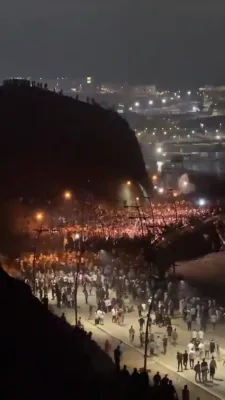
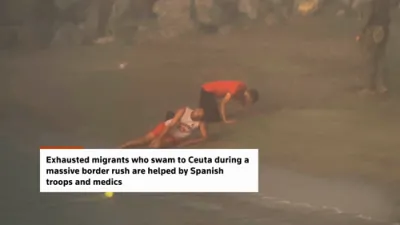
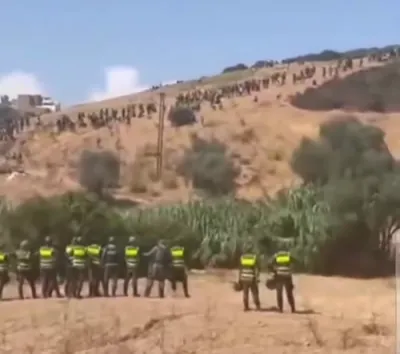
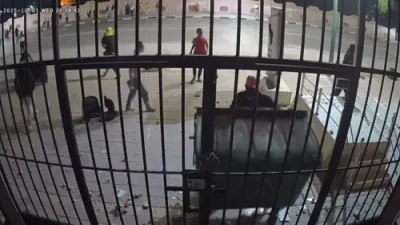
גרעניץ דורכפאל: סעוטא פלאצירט אימיגראנטן אין צייטווייליגע שעלטערס נאך א מאסיווע גרעניץ אריבערגאנג פון מאראקא.
CEUTA MOVE: Authorities Shift Thousands of Migrants from Beach to Industrial Zone
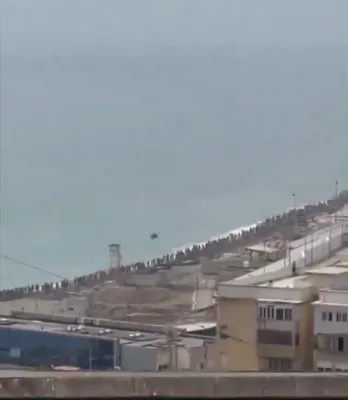
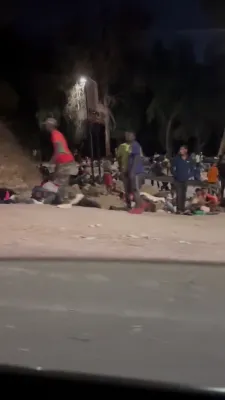
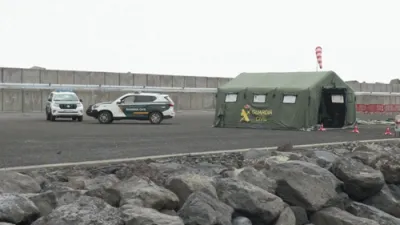
Spanish authorities in the North African enclave of Ceuta have relocated several thousand migrants from El Trampolín beach and city streets into temporary shelters, including military facilities, parking lots, and a racecourse. The large-scale operation followed a mass crossing from Morocco on July 30, when tens of thousands entered the territory. While most eventually returned, around 9,000 remained in difficult conditions. Officials moved the group voluntarily and without reported clashes.
The migrants were shifted from the beach area into industrial and temporary sites still inside Ceuta rather than being returned to Africa. Local residents and critics have questioned why the enclave continues to house them instead of enforcing removal. The decision leaves the population within Spanish territory on the European side of the Mediterranean. Additional sites, including Loma Margarita, are being prepared as the situation continues.
Humanitarian concerns and pressure from residents drove the relocation effort after the July influx overwhelmed open areas. Migrants had been living in poor conditions along the beach and streets, prompting authorities to clear those locations. Yet the transfer keeps the group inside Ceuta, a small Spanish territory sharing a border with Morocco. The limited size of the enclave means the presence remains highly visible to the local population.
Critics argue that moving migrants from the beach to industrial zones does nothing to resolve the underlying issue of illegal entry. With thousands still present and more facilities under preparation, the enclave continues to absorb the pressure rather than reverse it. The episode underscores ongoing challenges along Europe’s southern frontier, where mass crossings test both capacity and political will to enforce borders. As temporary centers fill, the question of long-term removal remains unanswered.