65 BILLION BARRELS: Vance Calls Venezuela Oil Pact a Historic American Win
Gallery
Videos
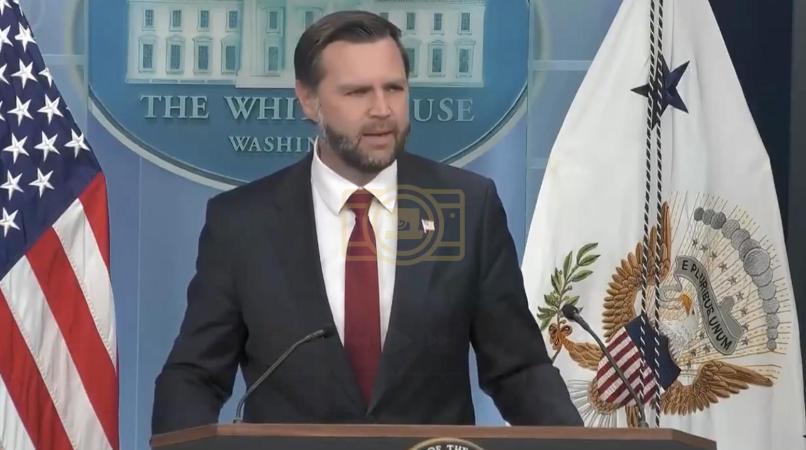
Vice President JD Vance stood before the press and delivered an emphatic endorsement of one of the Trump administration's most consequential foreign policy moves in years. It's just an amazing testament to what a smart foreign policy could look like and how it feeds back in to good outcomes for the American people, Vance said, describing the new U.S.-Venezuela oil arrangement as effectively a new 65 billion barrel oil reserve for the United States. The deal, brokered at President Trump's direction by Secretary of State Marco Rubio and Secretary of Defense Pete Hegseth in coordination with Venezuelan interim president Delcy Rodríguez, followed the ouster of Nicolás Maduro and represents one of the largest energy agreements the U.S. has struck with a foreign nation in modern history. For an administration eager to show tangible wins on energy policy, this deal has quickly become a centerpiece talking point.
The mechanics of the agreement are substantial. Venezuela's interim government granted a private company called North American Blue Energy Partners, or NABEP, 100-year development rights to 17 oil fields holding roughly 65 billion barrels of proven reserves, an amount that actually exceeds the entire proven oil reserves currently held within U.S. territory. In exchange, NABEP granted the Pentagon's Office of Strategic Capital a 35 percent equity stake in its corporate parent, while the State Department secured the right to purchase, at production cost, a guaranteed share of the oil produced across all current and future NABEP fields, along with the right of first refusal on the remainder. NABEP, run by Venezuelan businessman Alejandro Betancourt, has also committed to investing up to 100 billion dollars in new oil infrastructure to rapidly scale up production, a pledge officials say will be carried out at no direct cost to American taxpayers.
The scale of ambition here is hard to overstate, but so are the challenges standing in the way. Venezuela's current oil output sits at roughly 1.2 million barrels per day, less than a third of what the country produced at its late-1990s peak, the result of decades of underinvestment, nationalization policies, and sanctions-driven decline. Turning 65 billion barrels of reserves sitting in the ground into meaningful daily output capable of moving global oil markets or lowering prices at the pump will require years of sustained investment and infrastructure rebuilding, not a single signed agreement. That reality has left energy analysts far more cautious than the administration's celebratory tone might suggest, with many questioning how quickly, if at all, ordinary Americans will feel the benefits Vance described.
Even with those uncertainties, the administration is framing the deal as proof of concept for a broader foreign policy approach, one that pairs diplomatic leverage with direct economic stakes designed to benefit American interests over the long run. Officials argue the arrangement also supports Venezuela's own economic recovery, positioning expanded oil production as a foundation for future stability now that Maduro is no longer in power. Whether that vision plays out as smoothly as Vance's remarks suggest will depend on execution: rebuilding aging infrastructure, ramping up production responsibly, and translating reserves on paper into oil that actually reaches global and domestic markets. For now, the deal stands as a bold bet, one the administration is confident will pay off, and one skeptics say has yet to prove it can deliver on its scale.