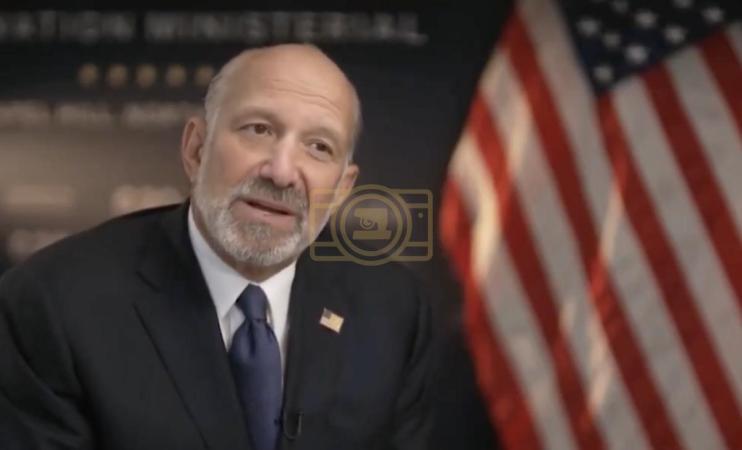
BUILD OR PAY: Lutnick's 50% Chip Dream Faces a Reality Check

Gallery
Videos
Commerce Secretary Howard Lutnick has been making a bold claim in recent public appearances: that American semiconductor production sat at just around 1 percent when the Trump administration took office, and that the goal now is to push that figure to somewhere between 40 and 50 percent by the end of the president's term. Lutnick has repeated versions of this claim across multiple interviews, telling one outlet the starting point was "below 2 percent" and heading toward 40 percent, with a possible climb to 50 percent if efforts with companies like Intel succeed. He's framed this as one of the administration's signature economic achievements in progress, tying it directly to a broader push to bring chip manufacturing back onto American soil after decades of offshoring to Asia.
Independent data tells a more complicated story. Estimates from industry analysts put the U.S. share of global semiconductor manufacturing capacity closer to 10 to 12 percent around 2022 to 2025, a steep decline from the roughly 37 percent America held back in 1990, but nowhere near the 1 to 2 percent figure Lutnick has cited. Even under the most optimistic projections tied to CHIPS Act-driven investment, analysts have suggested the U.S. share might realistically climb to somewhere around 14 to 20 percent by the early 2030s, a meaningful improvement but still far short of the 40 to 50 percent target Lutnick has laid out. That gap between the administration's stated ambition and the numbers industry experts consider achievable has drawn scrutiny from trade analysts who note that closing such a large gap would require well over $500 billion in new domestic investment.
The push isn't happening in isolation. Lutnick has been actively pressuring Taiwan, home to TSMC and the source of a large share of the world's most advanced chips, to shift more of its production capacity to the United States as part of what he's described as a "50-50" split between the two countries. He's also floated new tariffs on imported semiconductors, with a clear incentive structure: companies that build manufacturing facilities in the U.S. would be exempt, while those that don't would face costs to access the American market. TSMC, Samsung, SK Hynix, and Intel have all been named as key players in this reshoring push, with TSMC alone having expanded its planned Arizona investment to more than $165 billion.
Whatever the exact starting percentage was, the direction of travel is real. Investment commitments tied to domestic chip manufacturing have reportedly reached into the trillions of dollars in aggregate, and new fabrication plants are under construction across multiple states. The question isn't whether the U.S. is gaining ground, most analysts agree it is, but whether Lutnick's framing of the starting point and the ultimate target reflects the underlying reality or is better understood as an ambitious political talking point. As Trump's term continues, the actual production figures, tracked by independent industry groups rather than administration statements, will likely become the real test of whether this reshoring effort delivers on the scale Lutnick has promised.