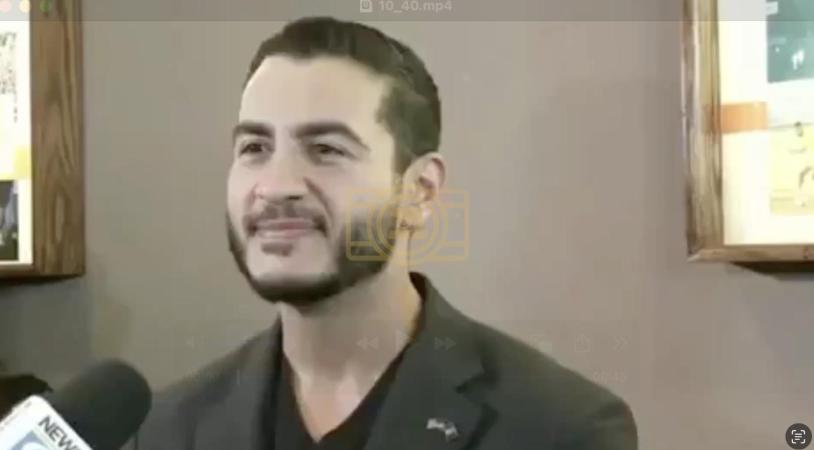
UNDER FIRE: El-Sayed Faces Backlash, Apologizes to Jewish Democrats Over Attack Comments
Gallery
Videos
Michigan Democratic Senate nominee Abdul El-Sayed is now trying to walk back comments he made months earlier following a Hezbollah-inspired attack on Temple Israel synagogue in West Bloomfield, where an attacker rammed a vehicle into a building housing more than 100 children before opening fire and dying by suicide. At the time, El-Sayed condemned the attack as heinous but also added that "hurt people do hurt people," a remark that referenced the attacker's family members who had reportedly been killed in an Israeli strike in Lebanon days earlier. That phrasing drew immediate criticism from members of Michigan's Jewish community, who felt it came uncomfortably close to excusing an act of terrorism rather than simply condemning it.
Nearly five months later, El-Sayed addressed the controversy directly while speaking to the Michigan Democratic Jewish Caucus at the state party's convention, acknowledging that his original comment had caused real harm. He told the group plainly that he had made a mistake, adding that he never intended for his words to be seen as justifying the attack. According to reporting on the event, he explained that his goal at the time had been to "offer context for why it happened," but admitted that the moment called for condemnation alone rather than any attempt at explanation. He also said that no one should ever trample on someone else's pain, a statement widely interpreted as a direct acknowledgment that his earlier remarks had done exactly that.
The apology comes as El-Sayed works to unify a Democratic Party still divided after a bruising primary campaign, one in which his rhetoric surrounding the synagogue attack became a flashpoint. His association with far-left streamer Hasan Piker, who appeared alongside him at campaign events despite making his own controversial remarks about Israel, has only added to the scrutiny from Jewish voters and party leaders alike. Michigan Attorney General Dana Nessel, who is Jewish, was among the Democrats who publicly criticized El-Sayed's original framing, contrasting it with how she handled a past mass shooting without examining the attacker's grievances.
Reaction to the apology has been mixed, with some critics arguing that the timing, coming only after El-Sayed secured the nomination and needs broader party support heading into November, undercuts its sincerity. Others have pointed out that just months earlier, El-Sayed had defended rather than retreated from his original comments, framing them as an act of political courage. Whether the apology will be enough to ease concerns among Jewish Democrats remains uncertain, but it marks a notable shift from a candidate who had previously stood firmly behind his original remarks. As the general election campaign heats up, El-Sayed's handling of this controversy is likely to remain a point of contention among voters weighing his candidacy.