GROWTH AT ANY COST: Bessent Urges G20 to Tear Down Barriers

Gallery
Videos
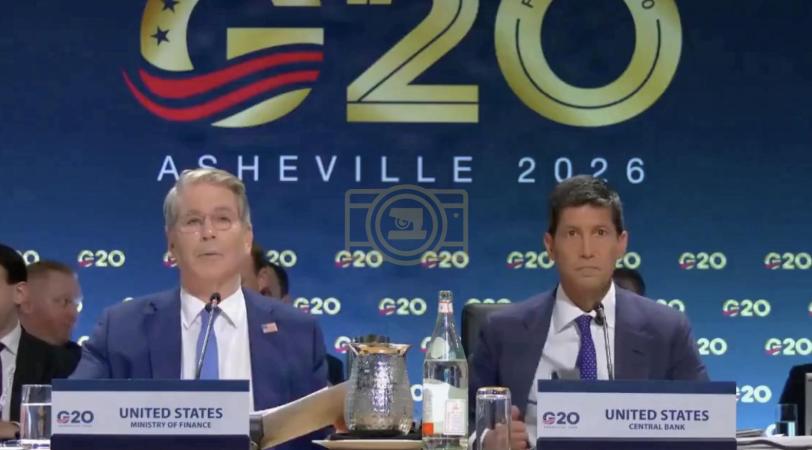
Treasury Secretary Scott Bessent used his opening remarks at the G20 financial meeting in Asheville, North Carolina, to deliver a confident pitch on the state of the American economy under the Trump administration. Speaking as the United States holds the G20's finance track presidency this year, Bessent framed stronger and more durable growth as the central priority, arguing that Washington is now leading the way in correcting the kind of policy failures that have historically held back economic expansion, both domestically and globally. He told finance ministers and central bank governors gathered for the meeting that global growth has stayed below its potential for far too long, and that governments need to take responsibility for the barriers within their own control rather than blaming outside forces. His comments came as the G20 finance track wrapped up a series of meetings in Asheville running from late August into early September.
Central to Bessent's message was a set of specific claims about what the administration has accomplished so far. He said the United States has become the world's premier destination for capital, describing record levels of business investment flowing into the country as evidence of that shift. He also pointed to what he called historic tax relief delivered to millions of working families, along with what he described as America reclaiming its position as the world's energy superpower. Bessent tied these achievements directly to deregulation efforts inside the administration, noting that agencies had dramatically exceeded an early goal of eliminating ten existing regulations for every new one introduced, reportedly hitting a ratio of 129 to one over the past year.
Bessent didn't stop at touting domestic wins; he used the platform to push other G20 members toward similar reforms. He specifically called out a list of structural issues holding back growth around the world, including excessive regulatory and administrative burdens, poorly designed tax systems and financial incentives, insufficient public and private investment, fragmented internal markets, and persistent gaps in workforce skills. By framing these as universal problems rather than uniquely American ones, Bessent positioned the US approach, marked by aggressive deregulation and tax cuts, as a model other nations should consider adopting if they want to escape the same growth slowdown. Federal Reserve Chairman Kevin Warsh echoed a similar sentiment at the same gathering, arguing that stronger growth is ultimately a policy choice rather than an inevitability, and noting that the US economy appeared to be gaining momentum.
The choice of Asheville as host city carried its own symbolic weight for the administration. Bessent noted that selecting the western North Carolina city reflected the Trump administration's commitment to the region's recovery following the devastating impact of Hurricane Helene, framing the summit itself as part of a broader story of rebuilding and resilience. Closing out his remarks, Bessent struck an unmistakably confident tone about what lies ahead, telling the assembled officials that the achievements he outlined are "shaping the next era of growth" and that the administration is "just getting started." Whether other G20 members embrace Washington's deregulatory approach or push back on some of Bessent's more sweeping claims about America's economic standing remains to be seen as discussions continue.