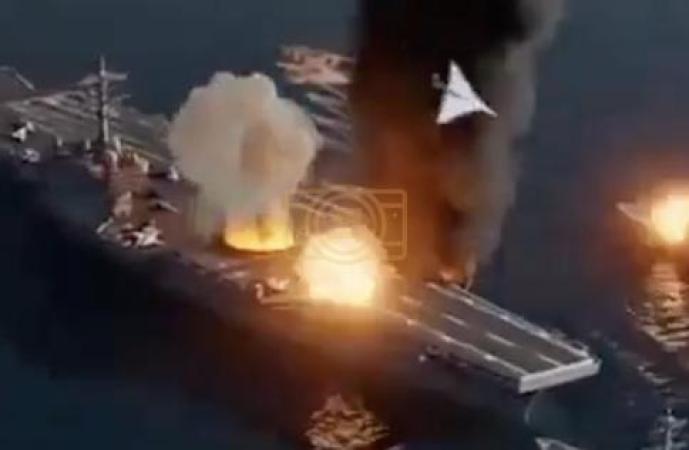
Iran Signals Threat With AI Video Simulation of U.S. Carrier Attack.
Gallery
Videos
Iranian state media has released an AI-generated propaganda video depicting a simulated drone and missile assault on the USS Abraham Lincoln aircraft carrier and its escort ships, framing the footage as a warning of Tehran’s military readiness amid escalating tensions with the United States. The video portrays coordinated strikes, onboard explosions, fires, and fabricated U.S. radio distress calls, culminating in the carrier appearing to sink beneath the sea.
Tehran described the production as a demonstration of its “defensive capabilities,” claiming any military action would only occur in response to a U.S. strike. Iranian messaging accompanying the release asserts that preemptive action would be justified as self-defense under international law, a narrative the regime has increasingly emphasized as regional tensions intensify.
The timing of the video coincides with the arrival of the USS Abraham Lincoln Carrier Strike Group in the Arabian Sea near Oman, reinforcing U.S. deterrence in the Middle East following last year’s June strikes on Iranian nuclear facilities. The deployment has prompted renewed warnings from Tehran, including threats of “all-out war” retaliation against perceived aggression.
Defense analysts note that while the video itself is clearly a digital simulation designed for psychological impact, Iran’s growing inventory of drones and missiles remains a credible concern in any potential conflict scenario. Reactions to the footage have ranged from ridicule over its cinematic presentation to calls for a firm U.S. response to counter Iranian intimidation tactics.
The release underscores Iran’s continued reliance on information warfare and visual propaganda to project strength and shape international perception. As U.S. forces maintain a forward presence in the region, the AI-generated video serves less as a forecast of imminent action and more as a calculated attempt to deter, threaten, and influence decision-makers amid an already volatile standoff.