DRIVERLESS DESERT HIGHWAYS: Saudi Arabia Bets Big on Autonomous Trucking Empire

Gallery
Videos
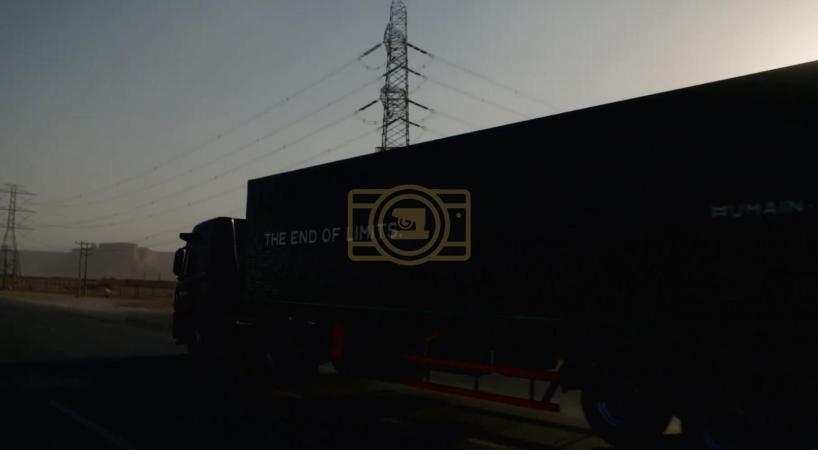
Saudi Arabia has announced plans to build what it's calling the world's largest autonomous trucking network, teaming up two very different but complementary companies to make it happen. HUMAIN, a Saudi AI firm backed by the kingdom's Public Investment Fund, is partnering with California-based Applied Intuition to deploy thousands of self-driving trucks across key logistics corridors by 2030. The initiative marks the first major rollout under HUMAIN's broader "physical AI" strategy, an effort to move artificial intelligence out of data centers and into real-world machines that move goods, people, and materials. Applied Intuition brings technology that's already proven itself elsewhere, with its Level 4 self-driving system currently operating on trucks in the United States, Europe, and Japan.
The scale of the ambition here is what sets this project apart from typical autonomous vehicle pilots. Rather than starting with a handful of test vehicles on a single road, the two companies are aiming to transform an entire country's freight network from the outset. HUMAIN's CEO, Tareq Amin, described the goal as changing "the economics of moving goods," framing thousands of trucks running around the clock as a way to boost logistics speed, cut costs, and expand capacity across the region. The trucks will run on Applied Intuition's Self-Driving System alongside its Vehicle OS software, technology built to scale across what the company describes as a billion moving machines, whether they're on highways, in mines, or on farms.
Freight is only the starting point. Once autonomous trucking is established, the companies plan to expand the same technology into robotaxis, ports, mining, manufacturing, agriculture, and construction, essentially building out a broader ecosystem of physical AI applications across Saudi Arabia. This fits squarely into the kingdom's Vision 2030 goals, which have consistently pushed for diversifying the economy and developing homegrown technological capabilities rather than relying entirely on imported systems. HUMAIN's sovereign data centers and compute infrastructure are meant to anchor this effort domestically, giving Saudi Arabia more direct control over the AI systems powering its transportation network.
Still, plenty of details remain unsettled, and the road to 2030 is likely to involve real technical and logistical hurdles. The companies haven't yet specified exactly how many trucks will be deployed, which routes will come first, which truck manufacturers will be involved, or when commercial operations will actually begin. Questions around edge-case reliability, how the system handles unexpected road conditions or rare scenarios, will need real-world answers before trucks can operate safely at scale without drivers. Even so, the potential upside is significant: proponents point to routes like the busy corridor between Riyadh and other Gulf cities as prime candidates for solving persistent driver shortages, suggesting this project could reshape how goods move across the region if the technology delivers on its promise.