ENERGY GAMBLE: Iran's President Unveils Iran's New Solar Power Push Due to Growing Blackouts.
Gallery
Videos
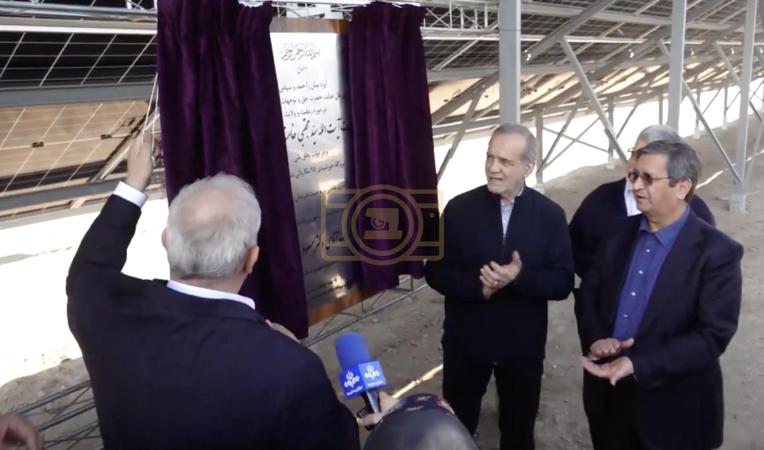
Iranian President Masoud Pezeshkian is pushing an aggressive expansion of solar power as the country struggles with electricity shortages and recurring power disruptions. The latest effort includes the inauguration of a major solar complex near Tehran designed to provide electricity to industrial users and help reduce pressure on the national grid. The move highlights the growing importance of renewable energy to Iran as officials seek additional generation capacity and a more reliable electricity supply. Iran has previously acknowledged that power shortages have become a major obstacle to industrial production, while Pezeshkian has repeatedly called for faster development of renewable projects.
The newly inaugurated complex is described as a 95-megawatt development made up of the 63-megawatt Qaed Shahid facility and the 32-megawatt Shohada Lamerd facility in the Shamsabad industrial area near Tehran. Its industrial focus is significant because Iran has been attempting to reduce the impact of electricity shortages on factories and businesses, with Pezeshkian previously warning that the government must move quickly so that factories do not face power shortages. The president has also argued that expanding solar generation can address electricity deficits while reducing reliance on conventional energy sources.
The project is being presented as part of a much broader renewable-energy drive, with Iran seeking to add hundreds of megawatts of new renewable capacity across the country. Previous government initiatives under Pezeshkian have included nationwide solar projects, including a 250-megawatt rollout inaugurated in 2025, while officials have pursued plans for substantially larger additions in the years ahead. The Iranian presidency has also backed a long-term target involving tens of thousands of megawatts of additional power-generation capacity, with solar panels and renewable projects playing a central role.
Pezeshkian’s administration has increasingly portrayed solar power as an energy-security issue rather than simply an environmental project. Iran has significant solar potential, but its electricity system has historically depended heavily on natural gas and other conventional fuels, leaving the grid vulnerable when generation capacity, fuel supplies or infrastructure cannot keep pace with demand. The government has therefore sought greater domestic production and deployment of solar equipment, alongside private-sector investment and financial support for new renewable facilities.
The larger question is whether Iran can build renewable capacity quickly enough to make a meaningful difference to its power shortages. The inauguration near Tehran is another visible sign that Pezeshkian wants solar energy to become a major part of the country’s response, but the scale of Iran’s electricity needs means individual projects will not solve the crisis on their own. If the government can accelerate construction, financing and domestic equipment production, however, the solar push could become one of the most important elements of Iran’s attempt to stabilize its electricity supply and keep its industrial sector running.