AID OR AMMO? Footage Shows Rockets Rigged Beside UNRWA Sacks in Gaza
Gallery
Videos
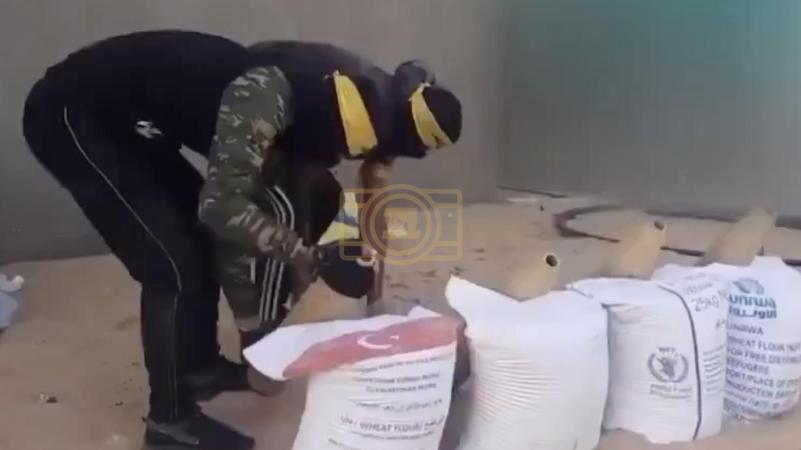
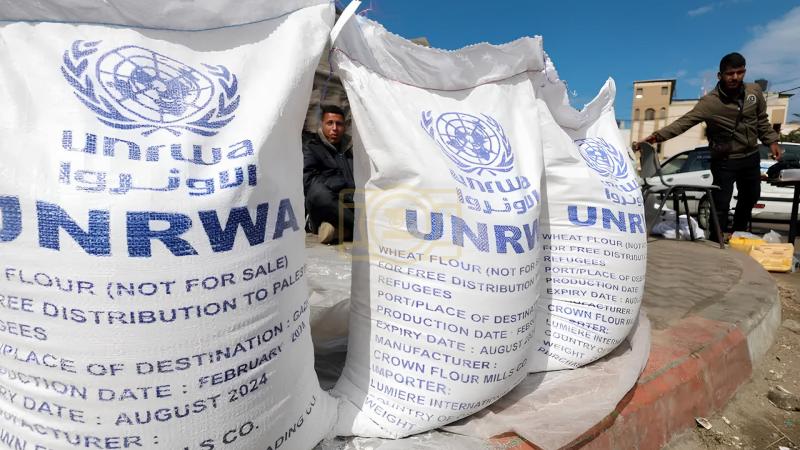
Newly circulated footage appears to show masked militants in Gaza assembling cylindrical rockets and handling wires and fuses on open, sandy ground, with the devices propped against white sacks bearing UNRWA, World Food Programme, and Turkish "wheat flour" markings meant for civilian aid distribution. The imagery has reignited a long-running and deeply contentious debate over whether humanitarian supplies intended for Gaza's population are being repurposed for military use by armed groups operating in the territory. Similar footage surfaced in 2024 out of Rafah, reportedly showing al-Aqsa Martyrs Brigade fighters using UN and humanitarian aid bags as staging or launch platforms for rockets aimed at Israel. While the exact authenticity and context of any single video clip can be difficult to verify independently, the pattern it depicts lines up with a series of documented incidents involving aid materials and weapons in Gaza.
Those documented incidents give the footage additional weight. In February 2026, the IDF's 7th Brigade announced it had discovered roughly 110 mortar shells along with several rockets and other military equipment hidden inside UNRWA-marked humanitarian aid sacks and blankets during operations in an Israeli-controlled area of southern Gaza east of the so-called Yellow Line. Israeli officials described it as one of the more significant weapons finds since the ceasefire agreement took effect in October 2025, and Israel's Foreign Ministry publicly accused UNRWA of aiding Hamas in the aftermath, arguing that "weapons don't end up in humanitarian aid bags by accident." That February discovery wasn't an isolated case either; watchdog groups compiling evidence since October 7 have cataloged multiple instances of weapons, tunnels, and militant infrastructure found inside or beneath UNRWA facilities, including schools and logistics compounds.
The broader controversy over UNRWA's role in Gaza predates this latest footage by years and has repeatedly strained the agency's relationship with Israel and some of its Western donors. Israeli officials have alleged that a notable number of UNRWA employees have direct ties to Hamas or Palestinian Islamic Jihad, with some intelligence assessments claiming dozens of staff members were either active in militant wings or involved in the October 7 attacks themselves. UNRWA has consistently denied systemic complicity, arguing that individual bad actors do not reflect the agency as a whole and that verifying every staff member's affiliations in a conflict zone is an enormous logistical challenge. Still, each new discovery of weapons inside aid packaging, or footage suggesting the same, adds fuel to arguments from critics who say the agency's oversight of its supply chain inside Gaza has been inadequate throughout the war.
For Gaza's civilian population, the controversy carries real stakes beyond the political back-and-forth. Aid organizations have repeatedly warned that Gaza remains on the brink of famine, and any perception, accurate or not, that shipments are being diverted for military purposes risks further complicating an already difficult aid delivery process and fueling calls to restrict or reroute humanitarian access. Israeli officials maintain that footage and physical weapons finds like the February cache justify continued scrutiny and inspection of aid convoys before they reach civilians. Humanitarian groups, meanwhile, argue that punishing the broader aid effort over the actions of specific bad actors risks worsening the very starvation crisis that the aid was meant to address, leaving the debate over UNRWA's role in Gaza as contentious and unresolved as ever.