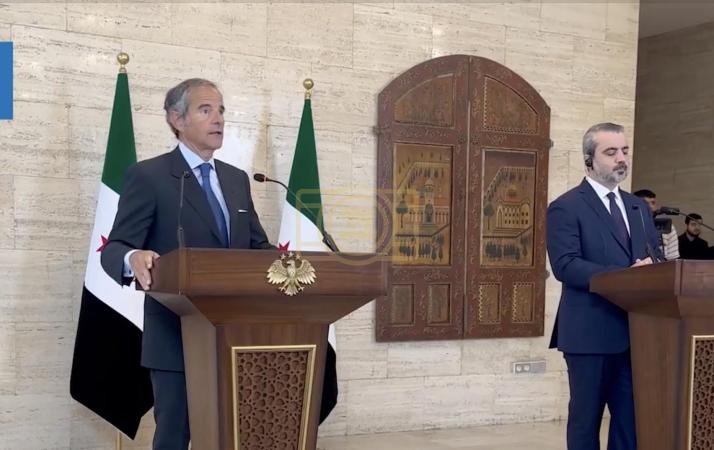
IAEA Director General Tours Former Reactor Site and Uranium Storage in Syria.

Gallery
Videos
IAEA Chief Visits Syrian Nuclear Sites Linked to Former Regime’s Secret Program
IAEA Director General Rafael Grossi visited key locations in Syria this week as part of efforts to resolve long-standing nuclear safeguards issues. The trip included the Deir Ez-Zor site, where a suspected nuclear reactor once stood before it was destroyed, and a second location where nuclear material was recently declared by Syrian authorities. The visit marks the most significant progress to date in addressing undeclared activities that originated under the previous regime. Grossi’s team observed excavation work at Deir Ez-Zor and conducted initial verification of the newly identified material.
Syria formally declared the existence of nuclear material at a previously undisclosed site on July 17, 2026. According to the IAEA, this includes several tons of natural uranium metal that must now be placed under international safeguards. A joint statement confirmed agreements on practical inspection steps, continued access, and Syrian commitments to full verification. The agency will report its findings to the IAEA Board of Governors as work continues. Officials also discussed expanded cooperation on peaceful nuclear applications once outstanding issues are resolved.
The Deir Ez-Zor site has long been associated with Syria’s covert nuclear ambitions under the former Assad regime. That facility was destroyed in a 2007 Israeli airstrike that prevented the completion of what Western intelligence assessed as a reactor capable of producing weapons-grade material. Residual questions about related activities, materials, and possible cooperation with other proliferators have remained unresolved for years. The current access and excavation efforts represent an opportunity to close those files, provided transparency is complete and sustained.
Full and rigorous verification remains essential. Any nuclear material left over from past clandestine programs carries proliferation risks if not properly secured and monitored. The IAEA’s presence and the Syrian government’s declared cooperation are positive steps, yet history shows that incomplete declarations or limited access can leave dangerous gaps. Continued international scrutiny, including strong support for the agency’s mandate, is necessary to ensure that Syria’s nuclear file is definitively closed and that no residual capabilities threaten regional security.