NO FRAMEWORK, NO EXCUSE: Iran's President Tears Into US-Israel "Human Rights" Claims
Gallery
Videos
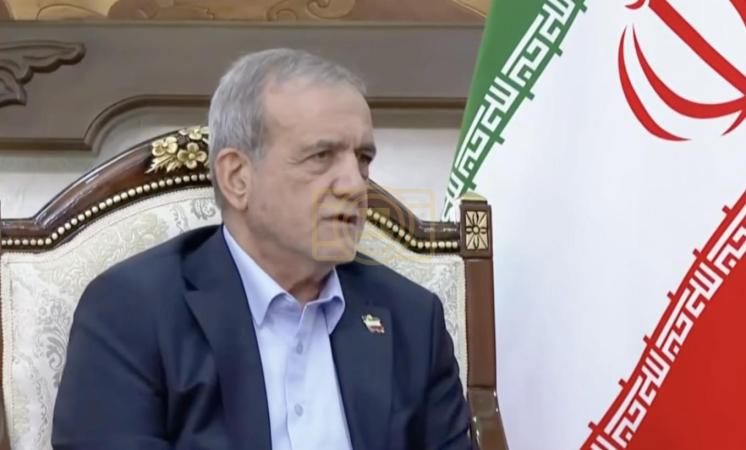
Standing before world leaders at the 26th Shanghai Cooperation Organisation Summit in Bishkek, Kyrgyzstan, Iranian President Masoud Pezeshkian delivered a pointed rebuke of the United States and Israel, accusing both nations of hiding behind hollow language while acting without any legal justification. He argued that the two countries claim to champion human rights and the rule of law, yet the actions they've taken against Iran have no legitimate framework that could possibly explain or excuse them. His remarks were widely understood to reference the recent strikes on Iranian civilian sites, infrastructure, and nuclear facilities, attacks that Tehran has repeatedly condemned as violations of international law. Pezeshkian's tone was defiant but measured, framing Iran not as a victim pleading for sympathy but as a nation that met aggression with resolve.
That resolve was central to his message. Pezeshkian declared that Iran stood against its adversaries with strength once already, and made clear the country is fully prepared to do so again if provoked further. It was less a threat than a statement of position, reinforcing an image Tehran has tried to project throughout the ongoing tensions: that it will not be cowed by military pressure or diplomatic isolation. The remarks came as Iran continues to grapple with the fallout from a war that began with strikes in February 2026, a conflict that has left lasting scars on both its infrastructure and its relationships with Western powers.
The setting for these comments was significant in its own right. Bishkek hosted leaders from across Eurasia, including Russian President Vladimir Putin, Chinese President Xi Jinping, and Indian Prime Minister Narendra Modi, all gathered under the banner of the SCO's 25th anniversary. Pezeshkian used the platform to align Iran with the broader push for a multipolar world order, a theme Russia and China have long promoted as a counterweight to Western influence. His meetings with Putin and other regional leaders underscored Iran's effort to deepen ties with non-Western powers at a moment when its relationship with Washington remains deeply strained.
Despite the sharp criticism, Pezeshkian left the door open for diplomacy. He reaffirmed that Iran would reciprocate if the United States honored its commitments under the interim Memorandum of Understanding signed in June 2026, a framework that had been negotiated to help de-escalate hostilities. This dual message, standing firm while signaling willingness to talk, appeared designed to reassure both domestic audiences and international partners that Iran is neither backing down nor closing off paths to resolution. Whether Washington responds to that offer remains to be seen, but for now, Pezeshkian's words in Bishkek made clear that Iran intends to negotiate from a position it considers one of strength, not weakness.