Loading
זעמל - Mayor Mamdani Announces 10,000 New ACS Vouchers for Low-Income Families   |  זעמל - Slovakia: Hundreds of Yidden who traveled for the yahrtzeit of the holy Chasam Sofer zy"a participate in a grand Hachnasas Sefer Torah on the stree..   |  זעמל - Jerusalem - Marking the yahrzeit of the "Sanigoron Shel Yisroel..   |  בקיצור - U.S. Military Tests Counter-Drone Technology at Mexican Border as Cartel Drone Use Surges   |  בקיצור - Immigrant Worker in Saudi Arabia Sentenced to Death for Social Media Post Mocking Muhammad   |  בקיצור - US Embassy in Moscow Issues Health Alert Following Reported Virus Leak at Russian Lab   |   זעמל - Mayor Mamdani Announces 10,000 New ACS Vouchers for Low-Income Families   |  זעמל - Slovakia: Hundreds of Yidden who traveled for the yahrtzeit of the holy Chasam Sofer zy"a participate in a grand Hachnasas Sefer Torah on the stree..   |  זעמל - Jerusalem - Marking the yahrzeit of the "Sanigoron Shel Yisroel..   |  בקיצור - U.S. Military Tests Counter-Drone Technology at Mexican Border as Cartel Drone Use Surges   |  בקיצור - Immigrant Worker in Saudi Arabia Sentenced to Death for Social Media Post Mocking Muhammad   |  בקיצור - US Embassy in Moscow Issues Health Alert Following Reported Virus Leak at Russian Lab   |  

Scientists Discover Largest Dinosaur Footprint Collection in Bolivia.
December 10th,

3 232
Main image for Scientists Discover Largest Dinosaur Footprint Collection in Bolivia.

Videos


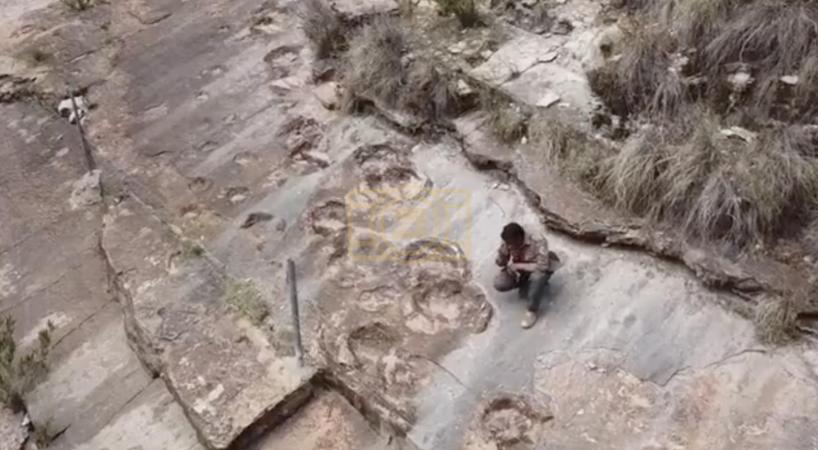
Scientists in Bolivia have announced a groundbreaking discovery: the largest collection of dinosaur footprints ever found. Paleontologists working in Toro Toro National Park, located in the Bolivian Andes, have uncovered more than 16,000 remarkably preserved footprints belonging to theropods—the dinosaur family that includes the iconic Tyrannosaurus rex.  

Researchers believe the tracks were left millions of years ago as dinosaurs attempted to swim across ancient lakes in the region. The animals pressed into the muddy lakebeds, leaving detailed impressions that were later sealed and protected as water levels rose, preserving them through the ages.  

The sheer number and clarity of the prints provide paleontologists with an unprecedented window into the movement, behavior, and environment of carnivorous dinosaurs. Experts say the Toro Toro site may become one of the most important paleontological landmarks in South America, offering new insights into the ecosystems that existed in the Andes long before human history began.  

The discovery underscores Bolivia’s growing significance in dinosaur research and highlights the global importance of preserving fossil-rich environments for scientific study.