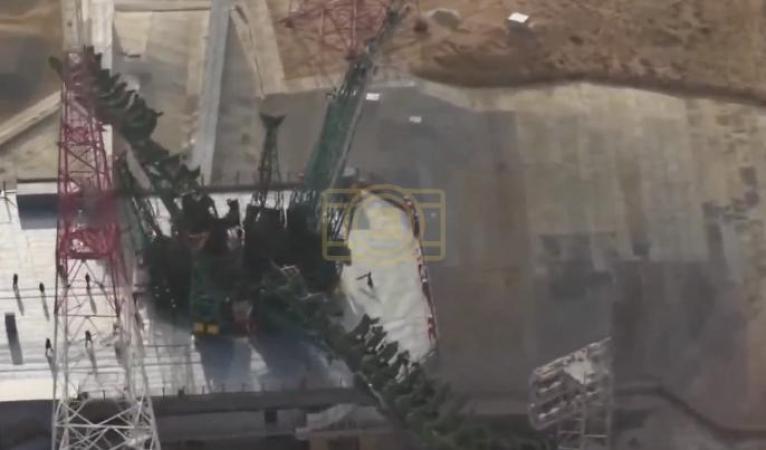
Russia Halts Human Spaceflight After Launch Tower Collapse.
Gallery
Videos
Russia’s human spaceflight program has come to an unprecedented standstill after the service tower at Baikonur Cosmodrome’s Launch Pad 31 collapsed during the Soyuz MS-28 mission. The incident marks the first infrastructure-induced halt to Russian crewed launches since the dawn of the space age in 1961, underscoring the mounting challenges facing Roscosmos amid sanctions, shrinking budgets, and declining system reliability.
The Soyuz MS-28 successfully lifted off on November 27, 2025, carrying two Russian cosmonauts and a NASA astronaut to the International Space Station. But as the rocket cleared the pad, its powerful exhaust plume struck and destabilized the aging service tower. Moments later, the structure buckled and collapsed, severely damaging critical support systems.
Launch Pad 31 is Russia’s only operational crewed launch site. With the tower destroyed and surrounding infrastructure compromised, Roscosmos announced an immediate suspension of all human spaceflight operations. Early estimates place repair costs at roughly $500 million, with a projected downtime of six to twelve months, depending on the extent of structural remediation required.
The incident comes at a moment of growing concern within the spaceflight community. A 2024 study published in *Acta Astronautica* reported a 25% decline in Russia’s launch reliability over the past decade—a trend attributed to funding shortfalls, aging infrastructure, and the increasing impact of Western sanctions on high-tech component procurement.
Although the MS-28 crew reached orbit safely, the collapse represents a serious blow to Russia’s role in global space operations. The country has prided itself on uninterrupted human spaceflight capability since Yuri Gagarin’s historic 1961 Vostok 1 mission. This forced pause breaks that legacy and raises pressing questions about the long-term sustainability of Russia’s space program.
Roscosmos engineers have begun assessing structural damage and drafting reconstruction plans, but officials acknowledge the setback will ripple across international crew rotation schedules. Until repairs are completed, Russia’s once-storied human launch capability remains grounded, highlighting the fragility of outdated Cold War–era infrastructure in a rapidly modernizing global space environment.