ROBOT THAT CAN DO HOUSEWORK SHOWCASES MAJOR AI BREAKTHROUGH: Motubrain 2.0 Learns, Plans and Corrects Its Own Mistakes
Gallery
Videos
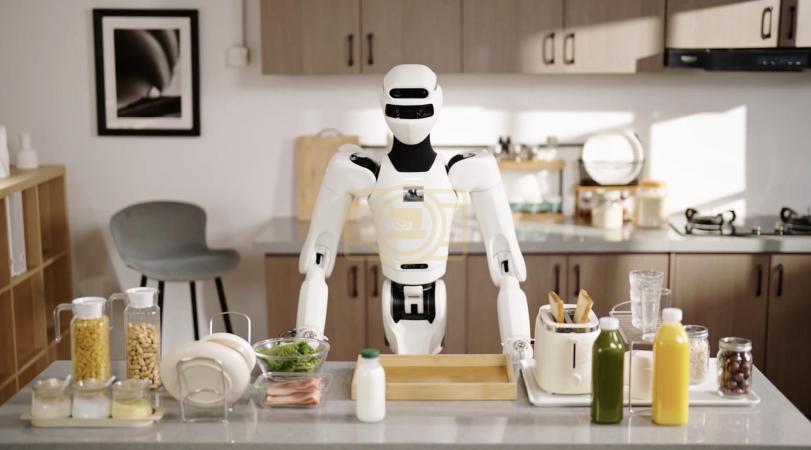
A robot capable of preparing breakfast, organizing household items and checking its own work is offering a glimpse into the future of automated home assistance. The technology, called Motubrain 2.0, combines a massive 20-billion-parameter World Action Model with an intelligent agent framework designed to plan tasks, select the right tools and change strategies when something goes wrong. Unlike conventional robots that simply execute a predetermined sequence of movements, the system visually verifies the outcome of each step before deciding what to do next. Its Motubrain-Harness framework coordinates the robot's actions through a collection of specialized tools and reusable skills, allowing it to tackle complicated tasks that require multiple steps. In the developers' technical report, the underlying model achieved leading results on four of six simulation benchmarks covering household manipulation, spatial reasoning, language understanding and adaptability to changing environments. The system is designed to move beyond individual commands toward more independent, goal-oriented household work.
Real-world experiments also demonstrated how much the agent framework can improve performance without retraining the underlying AI model. Across four tabletop tasks with instructions included in the model's training, the complete system succeeded in 29 of 32 trials, compared with just seven successful attempts when the World Action Model operated alone. The developers also tested the technology across 10 household tasks, using execution logs to identify recurring failures and revise tools, skills and instructions. After six rounds of improvements, the overall success rate increased from 44% to 63%, even though the model and high-level planner weights remained unchanged. The broader evaluation involved 13 robots, 18 household tasks and 3,137 recorded episodes over 20 days, giving the team a substantial set of real-world interactions to analyze. The results suggest that future home robots may become more capable not only through larger AI models, but also by learning from mistakes and refining how they perform everyday jobs. However, the system remains under development, and the reported results do not yet establish that it can reliably handle the full range of unpredictable situations inside an ordinary home.