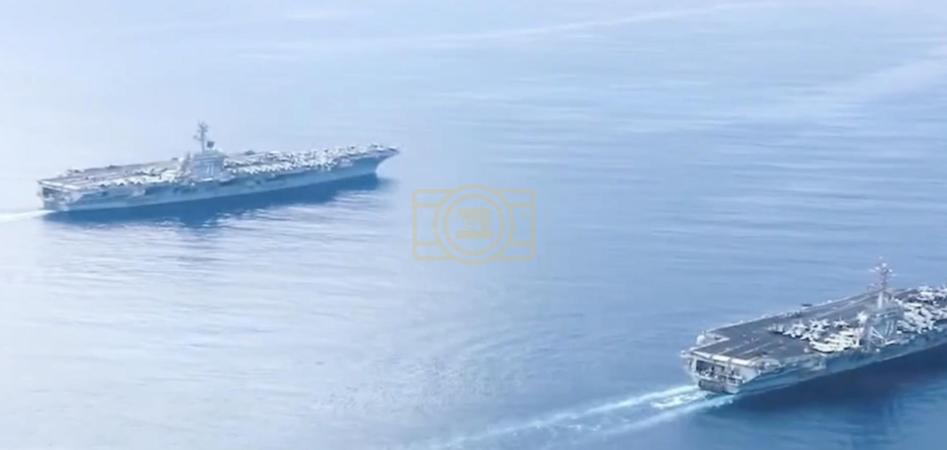
THREE U.S. CARRIERS DEPLOYED: Pentagon Expands Naval Presence as Iran Attacks Bahrain and Kuwait
Gallery
Videos
The United States has assembled three aircraft carrier strike groups in the U.S. Central Command area of responsibility, marking a significant increase in American naval presence amid escalating tensions with Iran. The USS Theodore Roosevelt arrived in the Middle East on November 15, joining the USS George H.W. Bush and USS George Washington, which were already operating in the region. The deployment brings additional aircraft, sailors, and military capabilities into an area where U.S. forces are enforcing a naval blockade of Iranian shipping. The buildup comes as Iran has intensified attacks across the Gulf, including drone and missile strikes targeting Bahrain and Kuwait. Bahrain reported intercepting Iranian aerial attacks, while Kuwait said its air defenses intercepted drones aimed at Ali Al Salem Air Base. The developments have raised concerns about a wider regional confrontation as Washington maintains military pressure on Tehran and keeps its options open.
The three-carrier presence also comes as President Donald Trump conducts high-level diplomatic engagements in China with Chinese President Xi Jinping and Russian President Vladimir Putin. While the naval deployment reinforces America's military posture, the broader confrontation remains far from resolved, with attacks on shipping and disruptions around the Strait of Hormuz continuing to threaten regional security. Oil prices moved lower on November 18, with Brent and U.S. crude benchmarks declining amid rising American inventories and expectations of recovering global supply. However, analysts cautioned that continued fighting and threats to commercial vessels were limiting the price declines, making it difficult to attribute the market movement to the U.S. blockade alone. The arrival of the Theodore Roosevelt therefore represents a major reinforcement of American naval capabilities, but it also comes with significant risks as Iran continues to challenge U.S. forces and regional partners. Whether the expanded presence will deter further attacks or contribute to another escalation remains a critical question for the region.