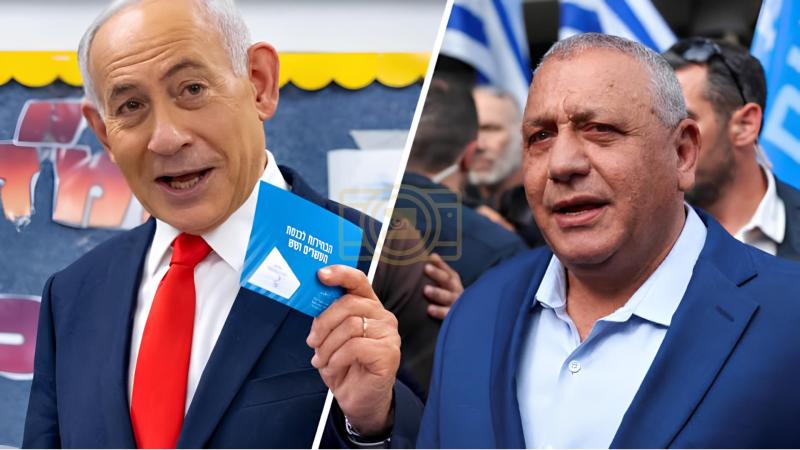
UNITY TALKS: Likud And Yashar Resume Negotiations As Netanyahu And Eisenkot Both Demand Premiership
Gallery
Negotiating teams from Prime Minister Benjamin Netanyahu’s Likud party and Gadi Eisenkot’s Yashar party resumed talks on Sunday, November 22, in Herzliya, as Israel faces a difficult effort to form its next government. Eisenkot invited Likud to renewed discussions in an attempt to explore every possible path toward a broad national unity coalition following the October 27 elections. However, the negotiations face major obstacles, beginning with the question of who would serve as prime minister. Netanyahu is pushing for a unity arrangement that would allow him to remain in office, while Eisenkot has made clear that any government formed under his leadership must be headed by him. Likud has also outlined conditions that include excluding Arab parties from the coalition, rejecting the establishment of a Palestinian state, and reaching agreements on security policy and legislation concerning the status of Torah students. The talks bring the two political camps to the negotiating table, but their sharply different demands leave the prospect of an agreement uncertain.
The renewed negotiations also expose divisions within Eisenkot’s own political bloc over how to secure a parliamentary majority and replace Netanyahu. Some leaders have backed a unity government with Likud under Eisenkot, while others have rejected any arrangement that would keep Netanyahu in power and have called for a minority government supported by Arab lawmakers. Likud, meanwhile, wants a coalition that excludes Arab parties and preserves key elements of its national and security agenda. Eisenkot has warned that he will not allow the government-formation process to drag on indefinitely and has indicated that other options remain on the table if unity negotiations fail. He received the mandate to form a government from President Isaac Herzog on November 8 and has until December 6 to complete the task, with a possible 14-day extension. With disagreements over leadership, security policy and potential coalition partners still unresolved, the coming negotiations could prove decisive for Israel’s political future.