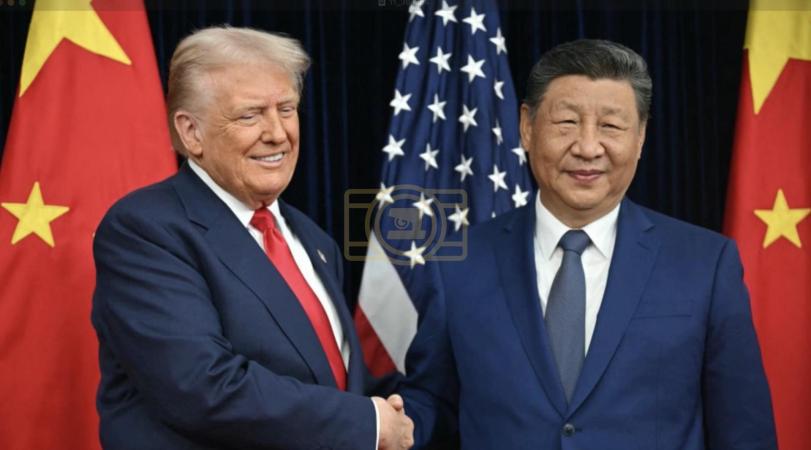
BREAKING: Trump Signals China Can Access U.S. Oil Markets Freely.
Gallery
Videos
President Donald Trump, in a Fox News interview on “Sunday Morning Futures” with Maria Bartiromo, emphasized the strength and flexibility of U.S. energy production, highlighting what he described as significant domestic oil overcapacity. He stated that the United States is in a position to supply global markets competitively, reinforcing America’s role as a dominant energy exporter. Trump’s remarks framed U.S. energy output as a strategic asset that strengthens both economic leverage and geopolitical influence. The comments align with his broader messaging on energy independence and market leadership.
Addressing China directly, Trump noted that Beijing can continue sourcing oil from multiple global suppliers, including the United States and Venezuela, without disrupting market stability. He suggested that global supply diversity ultimately benefits American producers, who can adjust pricing and output based on demand. This framing positions U.S. energy exports as both flexible and central to global energy flows. It also underscores the administration’s focus on maintaining strong trade channels even amid geopolitical tensions.
Trump further argued that increased domestic production gives the United States the ability to sell oil at highly competitive prices, potentially even lower than global benchmarks when market conditions allow. He described this as an advantage of American “overcapacity,” pointing to the responsiveness of U.S. energy producers. The remarks reflect confidence in the shale-driven expansion of U.S. output and its impact on global pricing dynamics. Supporters view this as evidence of sustained American energy dominance.
The interview also touched on broader geopolitical strategy, with Trump linking U.S. energy strength to ongoing pressure campaigns involving countries such as Iran and Venezuela. By expanding supply options and maintaining market influence, the administration aims to reduce adversaries’ leverage over global energy routes and pricing. The approach integrates economic policy with foreign policy objectives, particularly in contested regions. Energy, in this framing, functions as both a commercial product and a strategic instrument.
Overall, the comments reinforce a consistent policy direction centered on maximizing U.S. production capacity and leveraging it in global markets. By positioning the United States as a reliable and abundant supplier, the administration seeks to stabilize domestic prices while strengthening international influence. The remarks also signal continued engagement with major trading partners, including China, despite broader geopolitical competition. In this context, energy remains a core pillar of U.S. strategic power.